



Laptop Leasing for Enterprises

Every laptop you buy starts aging the day it ships
For most enterprises, laptops are the largest and most frequently replaced part of the IT fleet. They travel, they break, they fall behind on performance and security, and they leave with employees. Owning thousands of them ties up capital in assets that lose value every month.
Laptop leasing from CHG-MERIDIAN means:
- Pay for use, not ownership, across the whole laptop fleet
- Any brand. We're independent, so you pick the laptops your people need
- Refresh on a planned cycle instead of when devices fail
- Certified data erasure and remarketing at the end of every lease
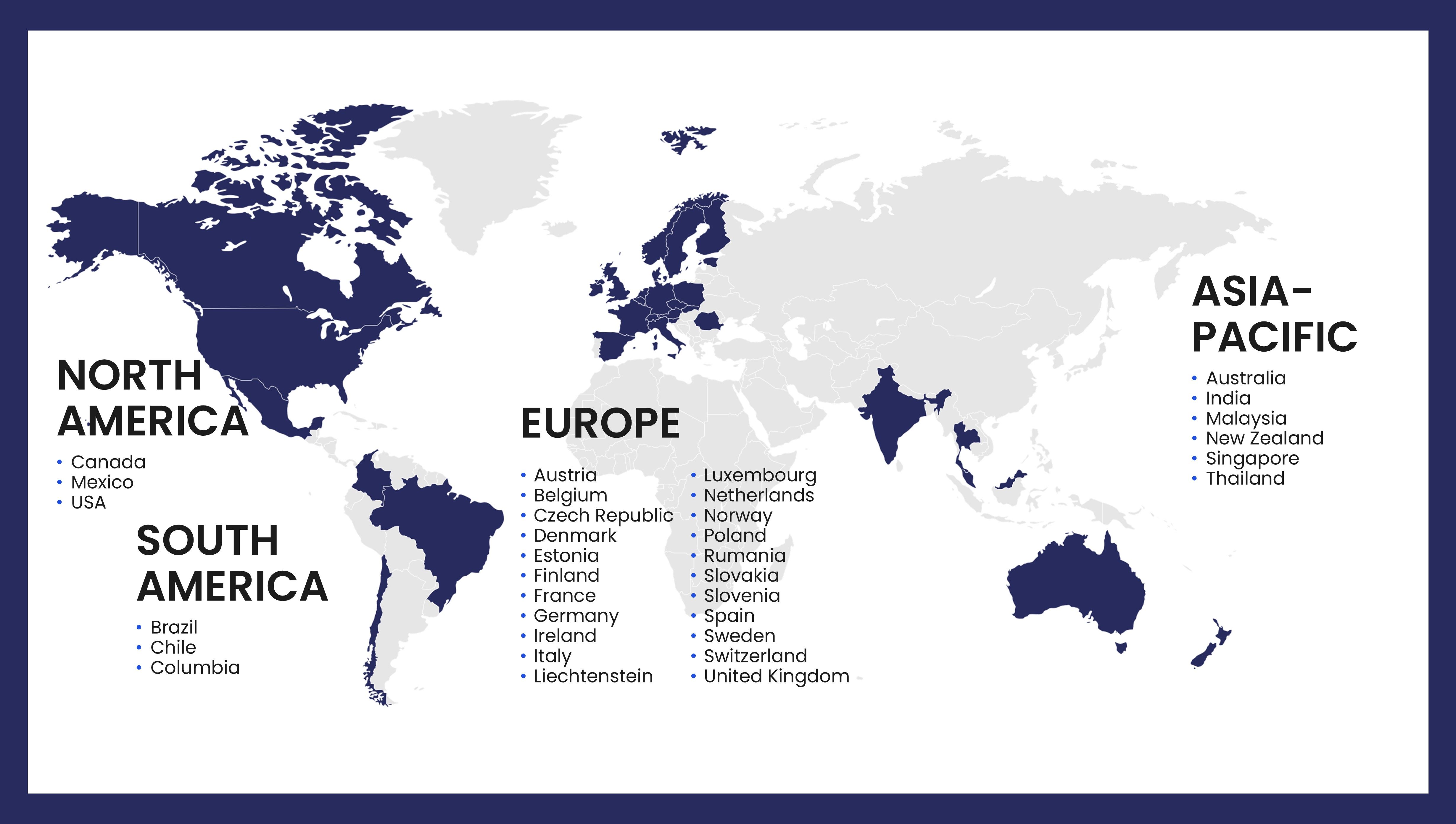
As the largest global independent IT lessor, we run laptop programs for enterprises with fleets spread across dozens of countries. We have offices in 35 countries and reach in 190+ through our partner network.
Why enterprises lease laptops instead of buying them
A laptop fleet is a large, recurring capital commitment against hardware with a short working life. Laptop leasing keeps the fleet current without owning devices you have outgrown. We lease across every major brand, including Apple, Dell, HP, Lenovo, and Microsoft, so the choice of device is always yours.
Laptops we lease
CHG-MERIDIAN leases business laptops across every major manufacturer, from a single department refresh to a global fleet. These are the categories most enterprises run.
Mainstream Windows laptops for office and hybrid workers, including Dell Latitude, HP EliteBook, and Lenovo ThinkPad. The bulk of most fleets, and the devices with the most predictable refresh cycle.
MacBook Air and MacBook Pro for design, engineering, and executive teams. MacBook leasing sits under the same agreement as the rest of the fleet, with no separate Apple program to manage.
Devices such as Microsoft Surface that switch between laptop and tablet use. Common for field sales, healthcare, and frontline managers.
High-performance laptops with professional graphics for CAD, engineering, data science, and AI development. They carry the highest price and the fastest performance curve, which makes them a strong fit for leasing.
Semi-rugged and fully rugged devices, such as Panasonic Toughbook and Dell rugged models, for field service, utilities, logistics, and manufacturing floors.
Low-cost, cloud-managed laptops for contact centers, shared workstations, and frontline staff.
Docks, chargers, bags, and other laptop accessories, financed under the same agreement as the devices they support.
Whether it is a MacBook fleet for a creative team or thousands of Windows laptops across several countries, the agreement works the same way. You choose the devices, and we finance the fleet around them.

Laptops leave the building, so the lifecycle has to follow them
Laptops are the one IT asset that goes home with your people. They move between offices, countries, and remote workers, and a lost or unreturned device is both a cost and a data risk.
Leasing puts structure around that. Every device is tracked from rollout to return in tesma, and at the end of the term we manage the return, certified data erasure, and remarketing. In 2025, CHG-MERIDIAN gave around 1.1 million IT devices a second lifecycle, 96 percent of all IT lease returns. That is value recovered, not written off.
How does laptop leasing with CHG-MERIDIAN work?
We do not sell laptops and we are not tied to any maker. You spec the device each role needs, and we finance it, whatever the brand.
We source devices across brands and resellers and bring them under one agreement, so a laptop refresh across several countries follows one process instead of one deal per market.
Most enterprises cannot say how many laptops they run, who has them, or when each is due for replacement. tesma, our asset management platform, keeps every device, contract, and cost in one place.
Most enterprises refresh laptops every three to four years. We structure the term around the cycle that fits your workforce, not an arbitrary calendar.
Every returned laptop goes through certified data erasure, so your company data does not travel with the device into its second life.
We manage the return and remarket devices through our global remarketing network, so residual value is recovered rather than lost.




Frequently asked questions: laptop leasing
CHG-MERIDIAN buys the laptops you choose and leases them to your business for a fixed term, usually matched to your refresh cycle. You pay for use rather than ownership. At the end of the term, you can return the devices, extend the lease, or refresh into new models.
The monthly cost depends on the device, the term, and the size of the fleet. With a fair market value lease, you pay for the portion of the laptop's value you use rather than the full purchase price, because CHG-MERIDIAN carries the residual value risk.
Buying can make sense for a small number of devices you plan to run until they fail. For enterprises running hundreds or thousands of laptops on a regular refresh cycle, leasing keeps capital free, spreads cost evenly, and removes the work of disposal. Your finance team should weigh the accounting treatment against your reporting standards.
Yes. We are independent of every manufacturer, so we lease MacBook Air, MacBook Pro, and other Apple devices alongside Dell, HP, Lenovo, and Microsoft laptops under one agreement.
Most enterprises refresh business laptops every three to four years, with high-performance workstations sometimes on a shorter cycle. Leasing lets you set the term to match that cycle, so devices are replaced before performance, support, and repair costs become a problem.
You can return them, extend the agreement, or purchase them. Returned laptops go through certified data erasure and are refurbished and remarketed through our global remarketing network. In 2025, CHG-MERIDIAN remarketed 96 percent of all IT lease returns.

Talk to us and discover how our expertise can benefit your business
Related insights and solutions
 Computer leasing
Lease desktops, workstations, and all-in-ones from any brand, with planned refresh cycles and certified data erasure.
Computer leasing
Lease desktops, workstations, and all-in-ones from any brand, with planned refresh cycles and certified data erasure.
 Smartphone and tablet leasing
Lease iPhones, Android devices, and iPads for your workforce under one agreement, with secure return at end of term.
Smartphone and tablet leasing
Lease iPhones, Android devices, and iPads for your workforce under one agreement, with secure return at end of term.
 Office equipment leasing
Lease monitors, peripherals, conferencing, and telecom equipment across every site under one contract.
Office equipment leasing
Lease monitors, peripherals, conferencing, and telecom equipment across every site under one contract.