 What Warehouse Automation Actually Costs
Key Takeaways
- Warehouse automation hardware costs range from under $100,000 for entry-level conveyor runs to several million dollars for full AS/RS deployments -- but hardware is only part of the investment.
- For every dollar spent on automation equipment, budget 30% to 60% more depending on technology type for engineering, integration, and commissioning.
- Leasing eliminates the upfront capital requirement and means operational savings begin offsetting costs from the first month of deployment.
- A single lease structure can cover multiple automation technologies across the same facility -- conveyors, robotics, and AS/RS under one monthly payment.
- Companies that lease warehouse automation typically reach positive ROI one to two years earlier than those that purchase outright.
EXPLORE THIS GUIDE
Table of Contents
What Warehouse Automation Actually Costs
 How Enterprises Pay for Warehouse Automation
 Why Leasing Works Particularly Well
 How CHG-MERIDIAN Finances Warehouse Automation
 Evaluate the ROI of Automation
Author: Philip Rosenmüller, Head of Fleet Management & Consulting, CHG-MERIDIAN
Published: April 27, 2026
"Every warehouse automation deployment we have seen includes cost categories the operator did not plan for at the start. The companies that execute best are those that build their budget around total deployed cost from day one -- not the equipment catalog."
Philip Rosenmüller, Head of Fleet Management & Consulting, CHG-MERIDIAN
Why Warehouse Automation Is No Longer Optional for Large Operations
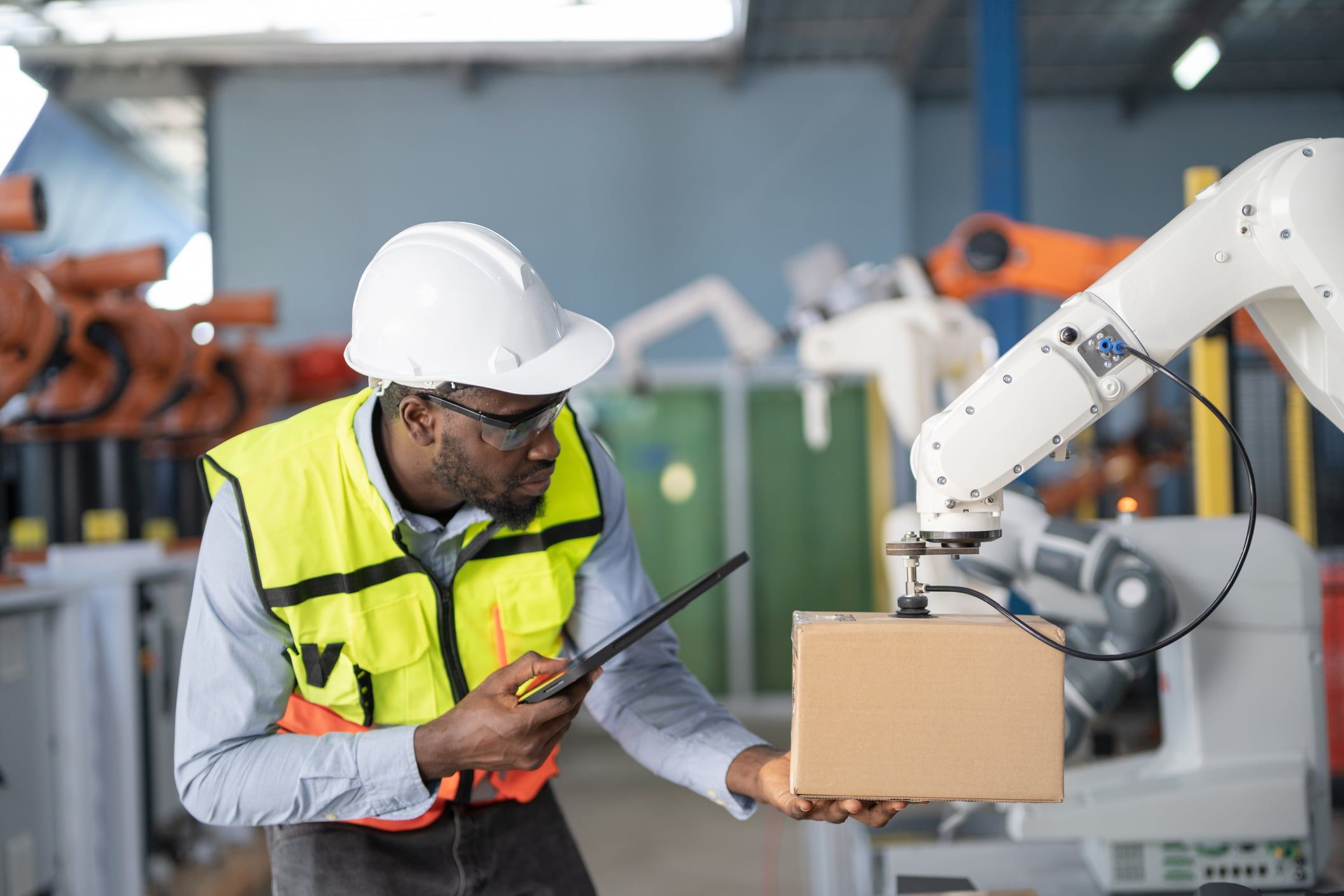
The pressure on warehouse and distribution operations has not let up. Labor costs keep rising. Workforce availability in industrial markets remains constrained. Consumer expectations for order accuracy and speed have set a baseline that manual operations struggle to meet consistently.
Automation was once the competitive edge of the largest logistics players. That is no longer true. Technology costs have come down, deployment timelines have compressed, and the financing models now exist to make automation accessible at almost any operational scale.
The adoption data reflects a market still in early transition. According to Modern Materials Handling's 2025 Automation Survey, 52% of companies still run mostly or fully manual order fulfillment operations, and only 4% describe their processes as highly automated. That gap between where operations are today and where competitive pressure is pushing them is exactly where the ROI case for automation lives -- and why the financing question is becoming urgent for a growing number of operations teams.
But adoption has not been uniform. The gap between companies evaluating automation and companies deploying it remains wide. For most, the constraint is not confidence in the technology. It is clarity on the full cost of deployment -- and how to finance it without disrupting the capital plan.
This guide is built for the operations, procurement, and finance leaders doing that budget work now.
What Warehouse Automation Actually Costs
Warehouse automation budgets fail at the same point every time -- the hardware quote arrives and planning stops there. The real number includes what it takes to get that hardware operational. This section breaks down costs by technology type, then covers what implementation adds on top.
Conveyor and Sortation Systems
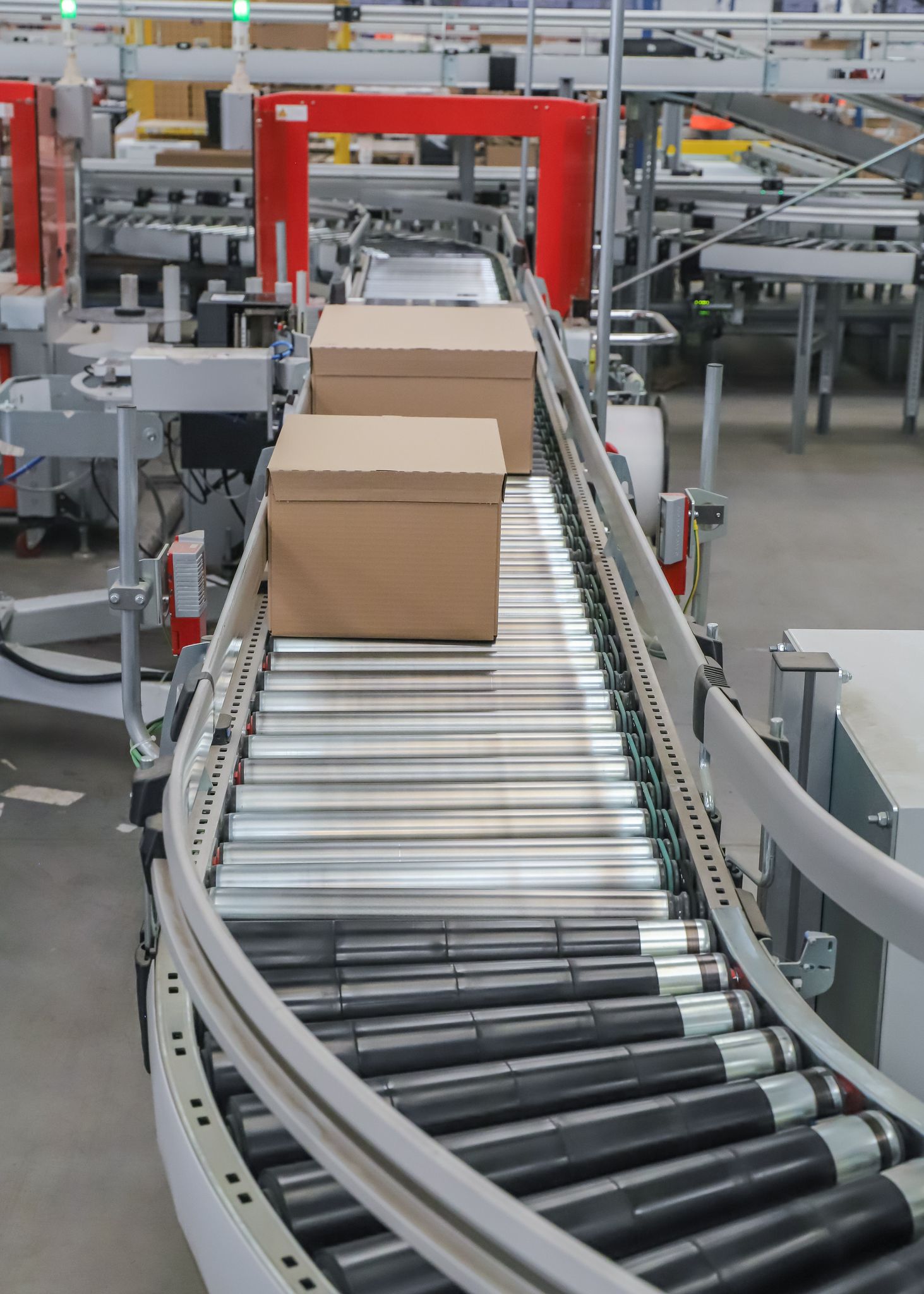
Conveyor systems are the most common entry point for warehouse automation. They range from basic lineshaft conveyors for carton movement to high-speed tilt-tray and cross-belt sortation systems capable of processing thousands of units per hour.
Purchase cost for a conveyor system depends primarily on system length, speed requirements, and sortation complexity. A basic conveyor run for a mid-size distribution center typically starts at $[XX] to $[XX] per linear foot installed. Full sortation system deployments for high-throughput environments commonly range from $[XX] to $[XX] for the complete system.
On a 48 to 60-month lease, monthly payments for conveyor and sortation systems are typically estimated at $[XX] to $[XX] per month depending on system size and configuration. These figures reflect CHG-MERIDIAN deployment experience and should be validated against your specific site and throughput requirements.
Conveyor systems are long-lived assets under normal operating conditions, which supports strong residual values and favorable lease terms relative to their purchase price.
Automated Storage and Retrieval Systems (AS/RS)
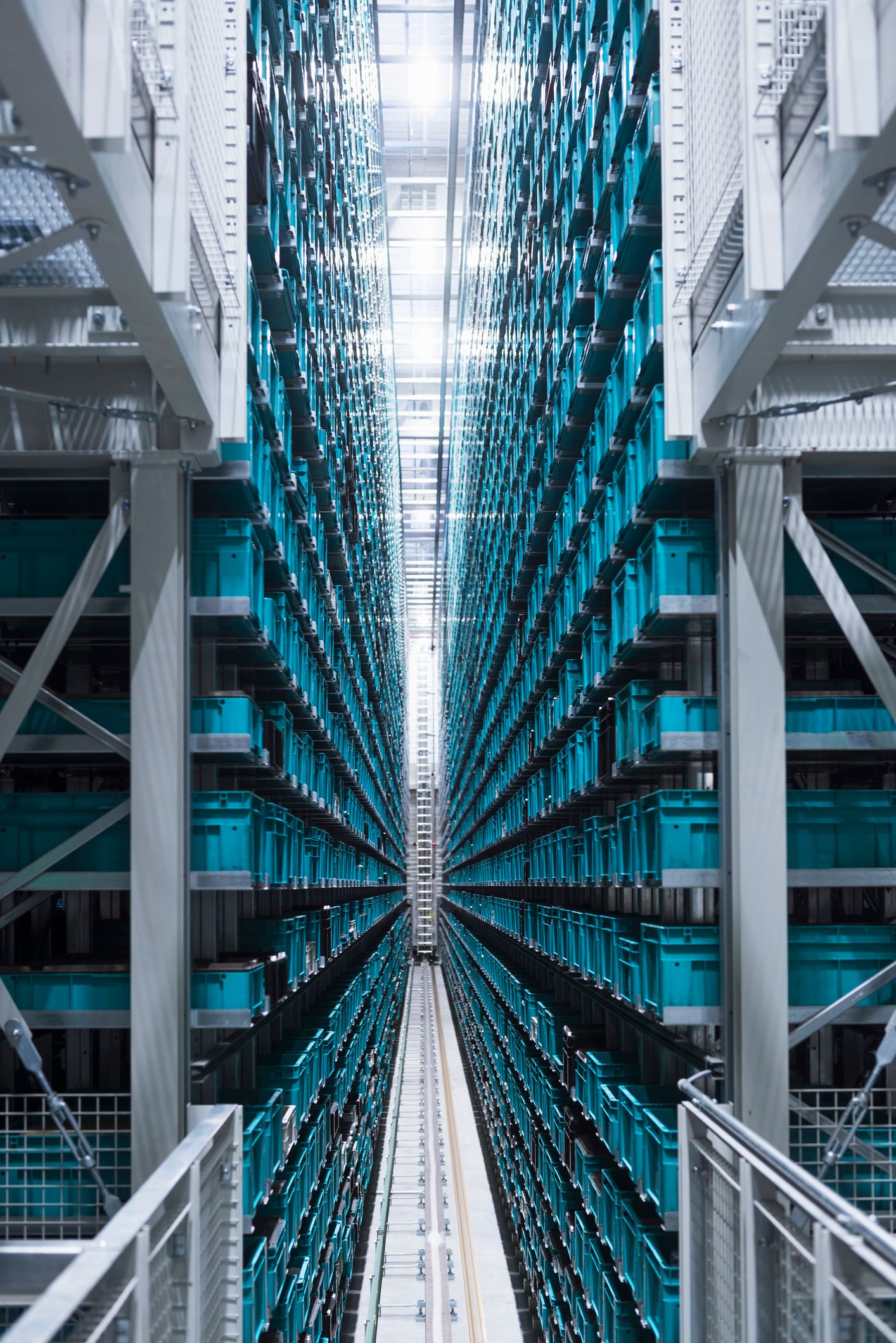
AS/RS represents the most capital-intensive category of warehouse automation. These systems -- which include unit-load cranes, mini-load systems, shuttle systems, and vertical lift modules -- are engineered to maximize storage density and throughput speed in facilities where floor space is constrained and SKU volume is high.
Purchase pricing for AS/RS systems is highly site-specific and scales with storage capacity, retrieval speed, and integration complexity. Entry-level vertical lift modules and small shuttle systems can start around $[XX]. Full unit-load AS/RS installations for large distribution centers commonly range from $[XX] to $[XX] or more.
Monthly lease payments for AS/RS hardware on standard 48 to 60-month terms are estimated at $[XX] to $[XX] per month depending on system scale. AS/RS deployments have among the highest implementation cost premiums of any automation category -- see the implementation cost section below.
Palletizing and Depalletizing Robots
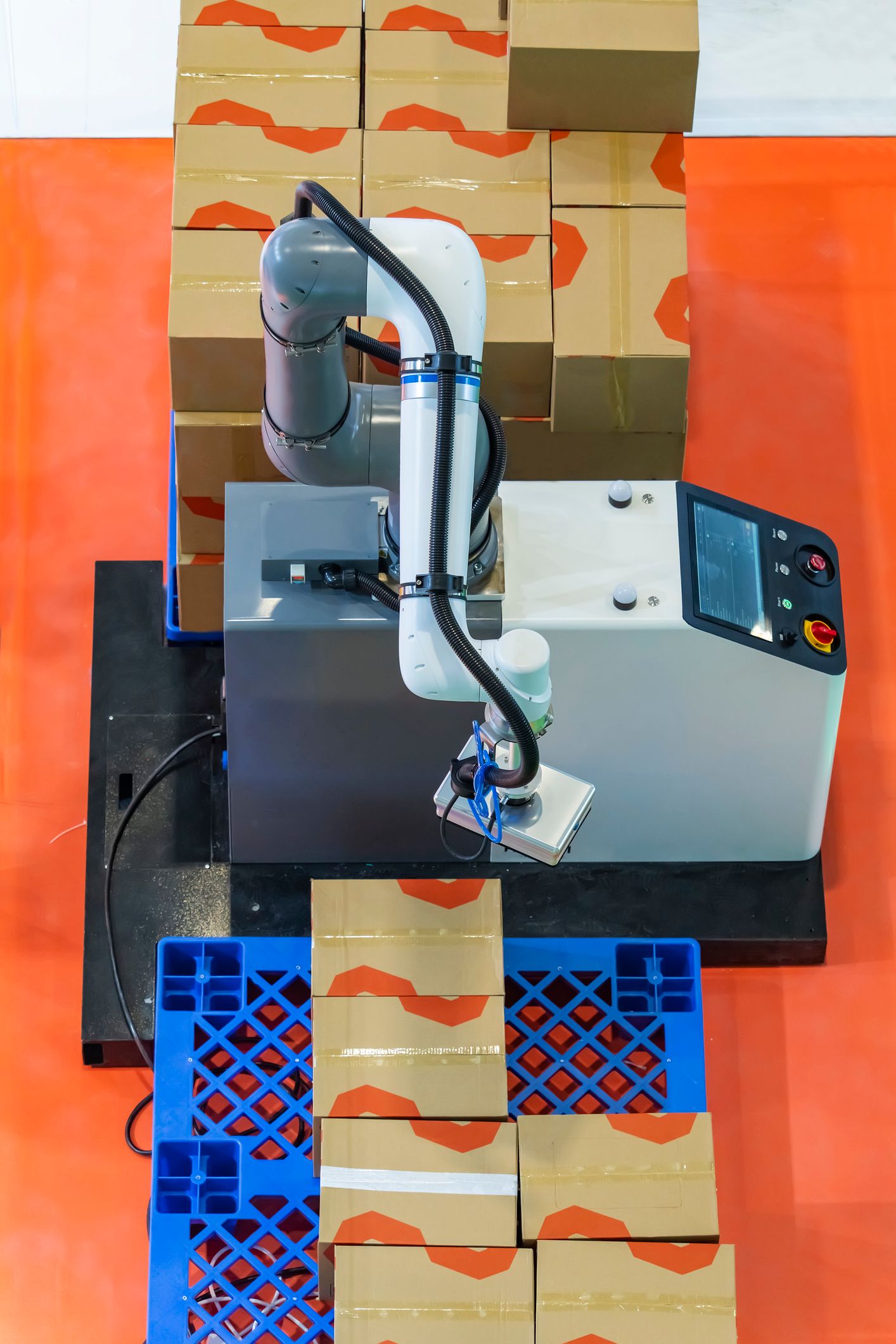
Robotic palletizing has become one of the fastest-growing automation categories in manufacturing and distribution. These systems replace manual pallet building and breaking, which is physically demanding work with high injury risk and significant labor turnover.
A standalone robotic palletizer typically ranges from $[XX] to $[XX] to purchase, including the robot arm, end-of-arm tooling, safety fencing, and basic controls. Integrated depalletizing systems -- which add vision technology and more complex tooling for handling mixed or unstable inbound loads -- sit at the higher end of that range.
Monthly lease payments for palletizing and depalletizing robots on 48 to 60-month terms are typically estimated at $[XX] to $[XX] per unit per month. These systems often have predictable operating cycles and consistent residual values, which can result in competitive lease rates relative to purchase price.
Goods-to-Person Systems
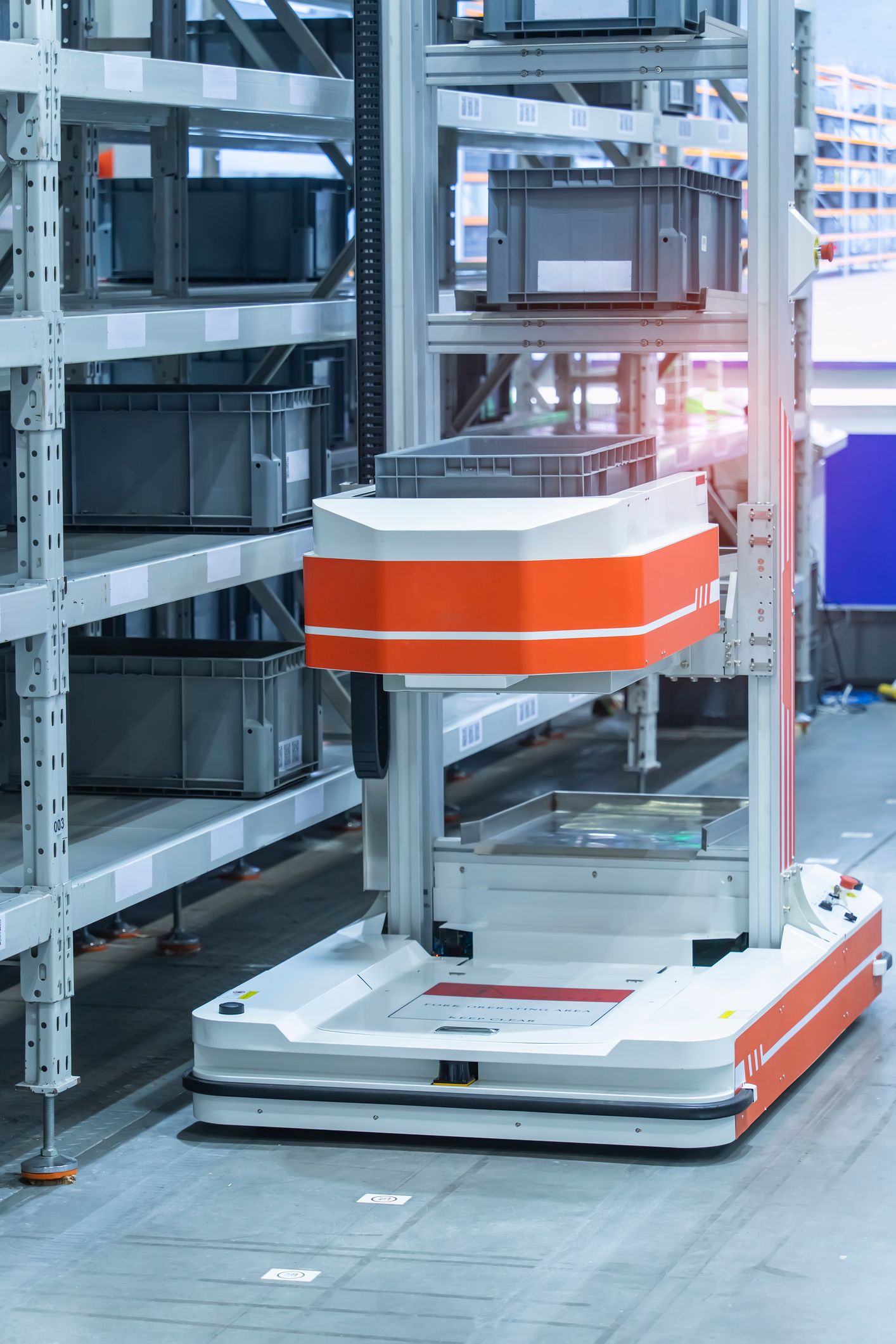
Goods-to-person (GTP) systems bring inventory to stationary pick stations rather than sending workers through aisles to retrieve items. The result is a dramatic reduction in travel time per pick -- one of the largest labor cost drivers in order fulfillment.
GTP systems range from shuttle-based retrieval systems to robotic item storage and retrieval platforms. A complete goods-to-person installation for a mid-size fulfillment operation -- including the storage structure, shuttles or bots, pick stations, and conveyor integration -- typically ranges from $[XX] to $[XX].
Monthly lease payments for goods-to-person systems on standard terms are estimated at $[XX] to $[XX] per month. Because GTP systems are highly integrated with facility infrastructure, deployment costs are a meaningful addition to hardware cost -- see the implementation cost section below.
AGVs and AMRs
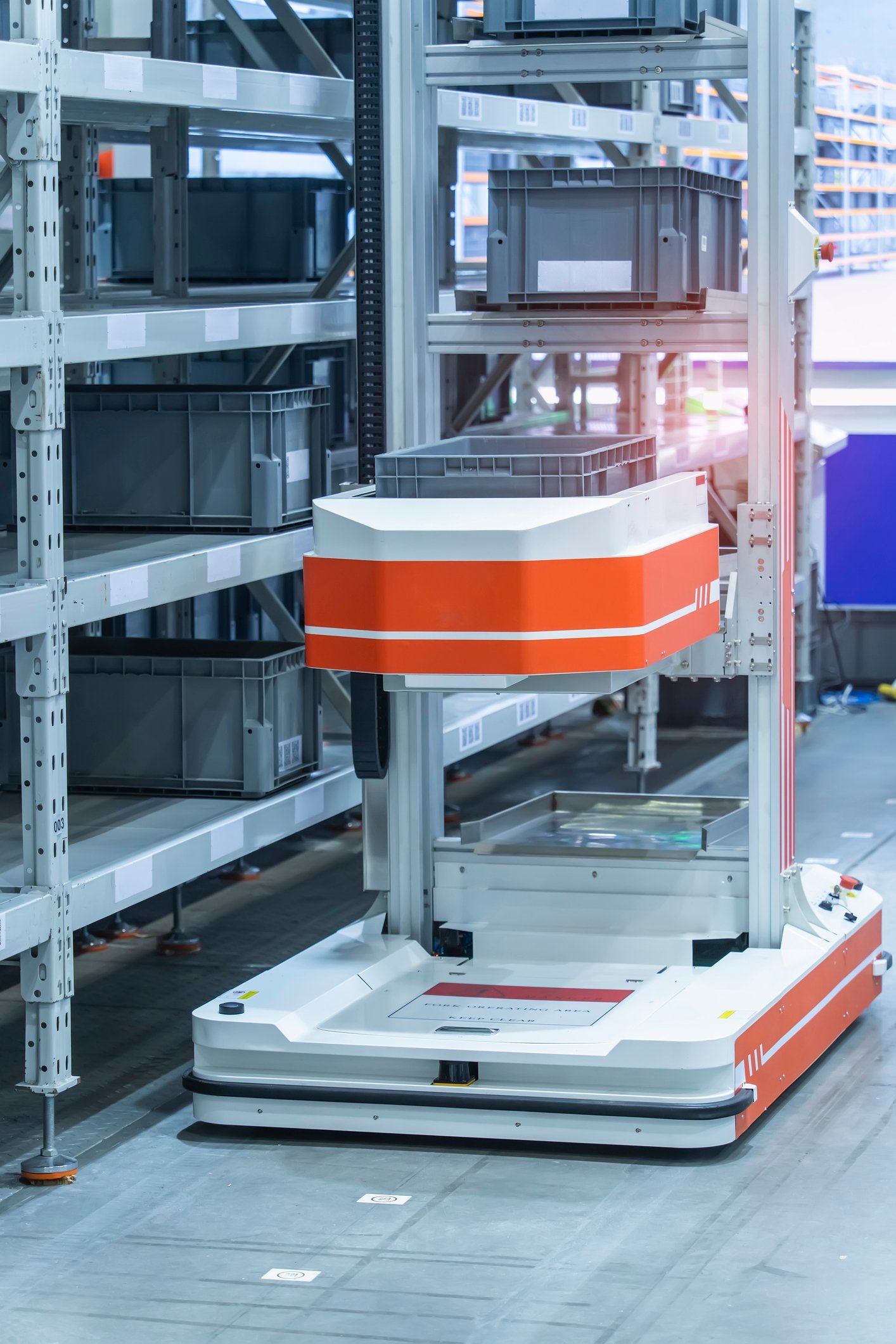
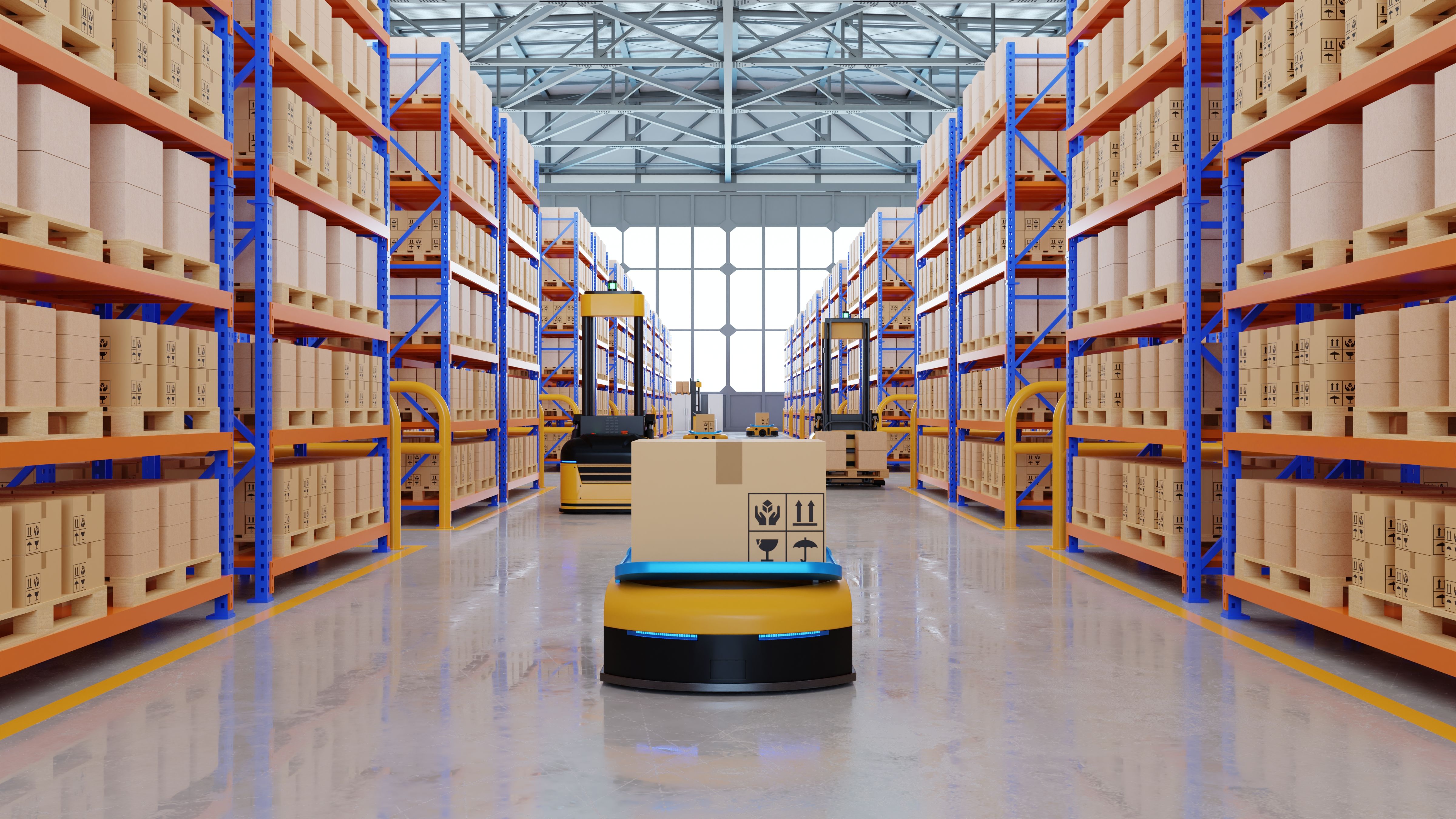
Automated guided vehicles (AGVs) and autonomous mobile robots (AMRs) are the most flexible and fastest-growing automation category in warehousing and manufacturing. They handle material transport, pallet movement, and goods delivery between workstations without fixed infrastructure.
For a full breakdown of AGV and AMR costs by equipment type, lease payment ranges, and financing structures, see our dedicated guide: The Real Cost of AGV and AMR Adoption: How to Finance the Transition.
A food and beverage manufacturer with three Midwest distribution facilities needed to replace aging manual pallet-building lines across two sites. The total hardware cost for the robotic palletizing systems -- 12 units across both facilities -- came in at $[XX]. With installation, safety infrastructure, and controls integration, the total deployed cost was $[XX], approximately 38% above the equipment price. Using a 60-month FMV lease structure, the company replaced the capital event with a predictable monthly payment across both sites and reallocated the preserved capital to a separate facility expansion project that had been stalled pending budget approval.
Real-World Example
The Implementation Cost Premium: What Gets Added on Top
Hardware cost is the most visible line item in a warehouse automation budget. It is rarely the largest one when you account for what it takes to get a system operational.
Implementation costs -- which include site preparation, structural engineering, power and controls installation, systems integration with warehouse management software, safety validation, commissioning, and go-live support -- add a significant premium on top of equipment cost. The size of that premium varies by technology:
- Conveyor and sortation systems: implementation typically adds 35% to 50% on top of hardware cost, driven by civil and electrical infrastructure requirements.
- AS/RS: the highest implementation premium of any automation category. Engineering, structural work, and controls integration commonly add 40% to 60% on top of hardware cost.
- Palletizing robots: lower infrastructure requirements than fixed systems; implementation typically adds 25% to 40%.
- Goods-to-person systems: moderate to high complexity; implementation typically adds 30% to 45%.
- AGVs and AMRs: implementation adds approximately 30% based on CHG-MERIDIAN deployment experience.
As a working rule for budget planning: assume total deployed cost will be 30% to 60% higher than the hardware purchase price, depending on which technology you are deploying and the infrastructure condition of your facility.
This distinction between hardware cost and total deployed cost matters for balance sheet treatment. Equipment is typically capitalized as a fixed asset. Installation, commissioning, and integration are usually treated as operating expenses. How you finance the hardware affects which costs land on the capex versus opex line -- a consideration that procurement and finance teams should map early in the planning process.
How Enterprises Pay for Warehouse Automation: Weighing Your Options
There is no single right answer to how companies finance warehouse automation. There are three primary models, each with distinct trade-offs.
1. Buy Outright
- Buying equipment outright means no monthly payments and full ownership from day one. For operations with highly stable workflows, long asset lifecycles, and available capital that has no better competing use, it can be the right call. The problem is that most enterprise operations do not fit that profile. A $2 million conveyor system that represents four to five years of capital payback is also a four to five year bet that your workflow requirements will not change. In fast-moving distribution and manufacturing environments, that is a significant bet. Payback timelines on outright purchases in warehouse automation commonly run well beyond five years when total deployed cost -- not just hardware -- is the denominator.
2. Vendor Financing and Robotics-as-a-Service (RaaS)
- RaaS models price automation on a per-use basis -- per pick, per pallet, per operating hour. The capital barrier is minimal. For smaller deployments using goods-to-person robots or basic AMRs in pick operations, RaaS can be a viable entry point. The structural limitation is scope: RaaS is primarily available for lighter robotic systems. High-value fixed infrastructure -- conveyors, AS/RS, full palletizing lines -- is rarely available on a RaaS basis. Vendor financing programs offered directly by OEMs provide another option, but typically require purchasing that vendor's equipment, which limits technology choice and can compromise the operational fit of the deployment.
3. Equipment Leasing
- Equipment leasing through an independent third party is how the majority of enterprise-scale automation programs are financed. The lessor funds the hardware purchase. The operator makes fixed monthly payments over the lease term and retains full use of the equipment throughout. At end of term, the operator can refresh to newer equipment, renew, or return. What makes independent leasing distinct from vendor financing is that the lessor has no stake in which technology you choose. You select based on operational fit. The lease follows the decision rather than shaping it.
"Warehouse automation is rarely a single purchase decision. It happens in phases, across technologies, sometimes across multiple facilities. The financing structure needs to match that reality -- not lock a company into one capital event that covers only part of the program."
Simon Harrsen, EVP North America, CHG-MERIDIAN
Why Leasing Works Particularly Well for Warehouse Automation
The financial case for leasing automation hardware is more specific than it might appear.
It is not just about avoiding upfront cost. The asset characteristics of warehouse automation equipment -- residual value, operational lifespan, technology cycle length -- interact with the lease structure in ways that make the math work particularly well for this category.
Fixed Infrastructure Holds Value
- Conveyor systems, AS/RS installations, and palletizing robots are purpose-built for industrial environments. Under normal operating conditions -- controlled temperatures, routine maintenance, industrial power -- these assets retain strong residual values. Conveyor components in particular are known for long operational lives and consistent aftermarket demand. Strong residuals translate directly into lower monthly lease payments, because the lessor can account for end-of-term value when pricing the lease.
FMV Leasing Advantage
- An FMV lease prices the monthly payment against asset depreciation over the lease term, not against the full purchase price. The lessor retains the residual value risk and accounts for projected end-of-term value when structuring the payment. For warehouse automation hardware with meaningful residual value -- and conveyor systems in particular hold value well -- this means the financed amount is significantly lower than the sticker price. On a $1.5 million sortation system, the gap between a payment calculated on full value versus depreciated value can add up to hundreds of thousands of dollars over the lease term. That difference goes directly to cash flow.
Leasing Compresses the ROI Timeline
- One of the most operationally significant advantages of leasing for warehouse automation is that it decouples each phase of deployment from the prior one. A company can lease its first palletizing system, validate the ROI, and then add conveyor infrastructure under a separate or blended lease without waiting for the first investment to pay back. Phased deployment is how most successful automation programs are actually built -- technology added as operational confidence grows. Leasing removes the capital constraint that otherwise forces operators to deploy everything at once or not at all.
Multi-Technology Financing Under One Structure
- A single CHG-MERIDIAN lease can cover multiple automation technologies deployed across the same facility or across multiple sites. Conveyor infrastructure, robotic palletizers, and an AS/RS system can all sit under one lease with one monthly payment. This simplifies budget management significantly compared to managing separate vendor financing arrangements or capital projects for each technology type. It also gives finance teams a single fixed cost to model against operational savings when evaluating the overall program ROI.
48 and 60-Month Terms Align With Technology Cycles
- Standard lease terms of 48 to 60 months align well with the product generation cycles in warehouse automation. Controls technology, software platforms, and robotic navigation systems all advance meaningfully over five-year windows. Leasing builds in a natural technology refresh point: at end of term, companies can upgrade, renew, or return -- rather than carrying equipment that has been outpaced by newer options.
A large-scale distribution company leased a goods-to-person system for a single distribution center as its first automation investment. The system reduced pick labor costs by 34% in the first year of operation. At the end of the 60-month lease term, the company upgraded to a newer generation goods-to-person platform with improved throughput speed and a smaller physical footprint. The upgrade required no capital outlay -- it was structured as a new lease on the replacement system, with the returned equipment handled by CHG-MERIDIAN. The company is now evaluating a conveyor integration project at a second facility using the same lease structure.
Real-World Example
How CHG-MERIDIAN Finances Warehouse Automation
CHG-MERIDIAN offers equipment leasing for warehouse automation deployments across manufacturing, distribution, and logistics operations. The program is built around three principles.
Vendor Neutrality
- CHG-MERIDIAN has no commercial relationship with any warehouse automation manufacturer. That is not a minor footnote -- it is the operating premise. When a lessor is tied to an OEM, the financing conversation and the technology conversation become the same conversation. Clients end up evaluating equipment partly based on what financing terms come attached to it. CHG-MERIDIAN finances whichever system the client selects: domestic or international conveyor manufacturers, European or North American robotics brands, large integrated automation platform providers. The technology decision belongs to the operator.
What CHG-MERIDIAN Leases
- CHG-MERIDIAN finances the physical hardware -- conveyor systems, AS/RS structures, robotic palletizers, goods-to-person platforms, and related automation equipment. Implementation and integration costs can be bundled into the same structure, giving operations teams a single monthly payment that covers the full project deployment from day one. Software subscriptions and ongoing fleet management costs are typically structured separately as operating expenses. CHG-MERIDIAN also finances AGV and AMR hardware -- see the dedicated guide for robotics-specific cost and financing detail.
No Minimum Fleet Size: Start Where You Are
- Automation programs do not have to start at scale. A single palletizing robot at one production line, a goods-to-person system in one zone, a short conveyor run connecting two departments -- these are legitimate starting points and CHG-MERIDIAN finances them. The value of starting small is that each phase generates real operational data before the next investment is committed. Companies that have already deployed automation at European facilities -- where adoption timelines have historically run ahead of North America -- often move faster, using established playbooks from those deployments to compress the evaluation period on new sites.
How to Evaluate the ROI on Your Automation Investment
Most warehouse automation ROI models fail because they are built on incomplete cost inputs, not bad math. Here are the four categories that need to be in the model before the numbers mean anything.
- Hardware and lease cost: monthly lease payment multiplied by term, plus any upfront implementation costs not included in the lease.
- Labor displacement savings: the annual cost of the roles the automation replaces or reallocates, including wages, benefits, overtime premiums, recruiting, and turnover costs. In tight labor markets, factor in the cost of unfilled positions.
- Throughput gains: the value of additional output enabled by extended operating hours and reduced cycle times. Automation that runs two to three shifts delivers far faster payback than systems operating on a single shift.
- Soft ROI: safety improvements, reductions in product damage and order errors, lower absenteeism exposure, and the operational consistency that comes from removing human variability from high-repetition tasks.
Compare your current annual cost per unit processed -- per pick, per pallet, per shipment -- against what automation costs per unit once the lease payment, maintenance, and energy are factored in. In most warehouse automation ROI calculations, the automation wins on a per-unit cost basis within the first one to two years of operation. The question is how quickly you want to reach that crossover point.
Companies that lease rather than purchase typically reach positive ROI one to two years earlier than those that buy outright. The reason is simple: outright purchase requires recovering the full capital cost before the investment pays back. Leasing removes that recovery period. Operational savings begin offsetting the monthly lease payment from day one.
The Capital Decision Is Part of the Automation Decision
Warehouse automation is not a single purchase. It is a program that unfolds in phases, across technology types, and sometimes across multiple facilities. The companies that scale most successfully are the ones that treat the financing structure as a design input -- not an afterthought.
If you are evaluating a warehouse automation deployment and want to understand how leasing compares to outright purchase for your specific technology mix and operating profile, CHG-MERIDIAN can model the options.
Frequently Asked Questions
How much does it cost to automate a warehouse?
Warehouse automation cost depends on the technology types you deploy and the scale of the installation. Entry-level systems -- a single palletizing robot or a short conveyor run -- can start below $100,000. Full-facility automation programs combining conveyors, AS/RS, and robotics can run several million dollars or more before implementation is included. A realistic total budget adds 30% to 60% on top of hardware cost to cover engineering, integration, site preparation, and commissioning.
What is the cheapest entry point for warehouse automation?
Robotic palletizers and standalone AMRs are typically the most accessible entry points for operations new to automation. Both can be deployed at a single line or zone without facility-wide infrastructure changes. Leasing reduces the upfront commitment further -- a single palletizing robot on a 60-month lease can have a monthly payment well below the fully-loaded cost of the labor it displaces.
Can you lease warehouse automation equipment?
Yes. Most major warehouse automation hardware -- conveyor systems, AS/RS platforms, palletizing robots, goods-to-person systems, and AGVs and AMRs -- can be leased through an independent equipment lessor like CHG-MERIDIAN. Leasing eliminates the upfront capital requirement and replaces it with a fixed monthly payment. Implementation and integration costs can often be bundled into the same lease structure.
Can you lease warehouse automation equipment?
Yes. Most major warehouse automation hardware -- conveyor systems, AS/RS platforms, palletizing robots, goods-to-person systems, and AGVs and AMRs -- can be leased through an independent equipment lessor like CHG-MERIDIAN. Leasing eliminates the upfront capital requirement and replaces it with a fixed monthly payment. Implementation and integration costs can often be bundled into the same lease structure.
How long does it take to see ROI from warehouse automation?
Most enterprise warehouse automation deployments reach positive ROI within one to three years. High-utilization operations running multiple shifts can reach breakeven in under 18 months. Leasing accelerates ROI by removing the capital recovery period from the equation -- operational savings begin offsetting the lease payment from the first month rather than after years of capital payback.
What is included in warehouse automation implementation costs?
Implementation costs typically include site preparation (floor work, structural modifications, power infrastructure), controls engineering and software configuration, integration with existing warehouse management and ERP systems, safety validation, equipment commissioning, and go-live support. These costs are almost always treated as operating expenses rather than capital assets, which has implications for how they appear on the balance sheet relative to the leased hardware.
What is the difference between AGVs, AMRs, and other automation types?
AGVs and AMRs are mobile robots that transport materials through a facility. Other warehouse automation categories -- conveyors, AS/RS, palletizing robots, goods-to-person systems -- are fixed or semi-fixed infrastructure that handles specific tasks like storage, sortation, or pallet building. Many enterprise automation programs deploy both: fixed infrastructure for high-volume predictable flows and mobile robots for flexible transport between zones.
What happens at the end of a warehouse automation lease?
At the end of a standard equipment lease, companies typically have three options: upgrade to newer equipment under a new lease, renew the existing lease on the same hardware, or return the equipment. Because warehouse automation assets are built for industrial environments and maintained under service contracts, units commonly reach end of term in strong operational condition. This supports favorable renewal terms and residual value assumptions for lessors like CHG-MERIDIAN.
Get in Touch
Simon Harrsen leads CHG-MERIDIAN's North American operations, helping organizations optimize technology investments through smarter lifecycle management. Connect with him to discuss how your business can reduce costs and increase flexibility.

Simon Harrsen
Executive Vice President, North America
Stay Connected
Learn more
 Guide: Leasing Material Handling Equipment
Leasing material handling equipment is less about financing and more about building a strategy that keeps your operation competitive without locking up capital.
Guide: Leasing Material Handling Equipment
Leasing material handling equipment is less about financing and more about building a strategy that keeps your operation competitive without locking up capital.
 Forklift Fleet Management for Large Operations
This guide is written for operations, logistics, and procurement leaders managing material handling equipment at scale.
Forklift Fleet Management for Large Operations
This guide is written for operations, logistics, and procurement leaders managing material handling equipment at scale.
 Remarketing for Industrial
What do you do with your industrial technology at the end of its useful life? Are you using the option to remarket it? Learn how to implement an efficient remarketing solution that is both cost-efficient and sustainable.
Remarketing for Industrial
What do you do with your industrial technology at the end of its useful life? Are you using the option to remarket it? Learn how to implement an efficient remarketing solution that is both cost-efficient and sustainable.