
 Circular Tech Made for the AI Age
Learn how Fortune 500 organizations are utilizing lifecycle planning to harness the power of AI.
Circular Tech Made for the AI Age
Learn how Fortune 500 organizations are utilizing lifecycle planning to harness the power of AI.
Author: Philip Rosenmüller, Head of Fleet Management & Consulting, CHG-MERIDIAN
Updated: May 18, 2026
Author Bio: Philip Rosenmüller is Head of Fleet Management and Consulting at CHG-MERIDIAN, where he advises enterprise organizations on fleet economics, equipment lifecycle strategy, and total cost of ownership across industrial and material handling operations. His work has contributed to peer-reviewed academic research on forklift and intralogistics cost modeling, and his insights span fleet programs across Europe, North America, and global multi-site operations. He is a published and featured contributor in Supply and Demand Chain Executive, Modern Materials Handling, and Supply Chain Magazine.
Key Takeaways
- Aging material handling equipment costs more than most operators realize. Escalating maintenance, unplanned downtime, safety exposure, and disposal costs rarely appear in the original purchase comparison.
- Lease terms should be calibrated to operating hours, not calendar time. The same forklift running two shifts a day reaches end-of-useful-life significantly faster than one on a single shift.
- Equipment refresh benchmarks vary by type. Counterbalanced forklifts at 12,000 to 15,000 hours, reach trucks at 10,000 to 15,000 hours, AGVs and AMRs at 3 to 5 year terms due to technology compression.
- An independent lessor matters. A partner tied to a specific manufacturer carries a conflict of interest when it comes to sourcing and maintenance decisions.
- Total cost of ownership is the right frame. Modeling fleet refresh schedules, residual value, and end-of-term options before the first payment is made separates strategic leasing from simple financing.
"Leasing isn't about financing equipment. It's about controlling what happens to it. When you own the lifecycle, you own the operation."
Philip Rosenmüller, Head of Fleet Management & Consulting, CHG-MERIDIAN
What Does It Actually Cost to Own Material Handling Equipment Too Long?
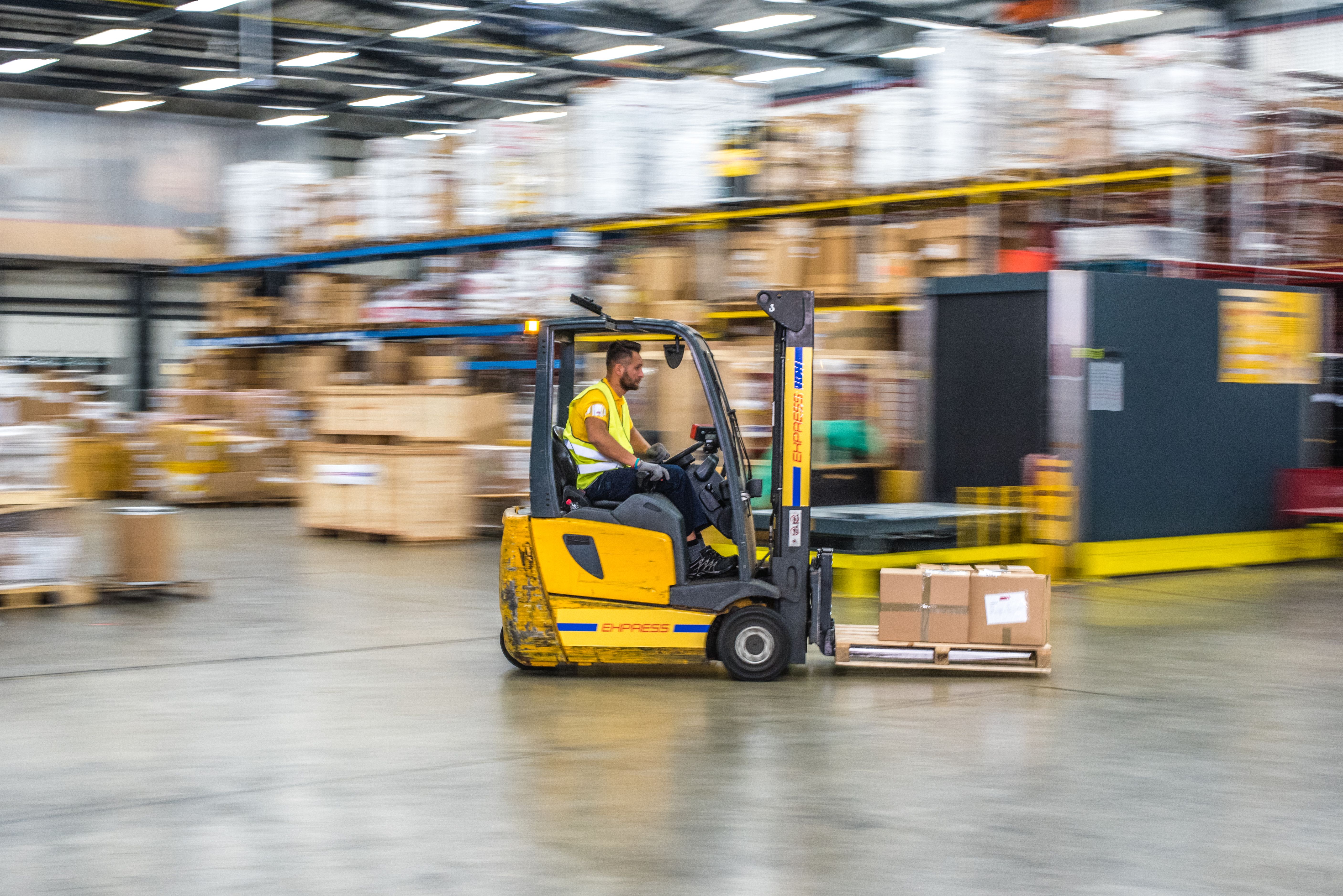
- The real cost of aging material handling equipment is the cost that never shows up in the original purchase decision. Maintenance expenses, unplanned downtime, safety exposure, and disposal fees accumulate well beyond the sticker price, and they accelerate after year three of a forklift or lift truck's service life.
- Consider a fleet of electric forklifts purchased seven years ago. At year three, maintenance costs started climbing. By year five, parts availability became an issue. By year seven, the fleet is functional but consuming disproportionate resources and carrying safety risks that were not present when the equipment was new.
- Powered industrial trucks are a significant and persistent source of serious workplace injuries across U.S. distribution and manufacturing operations. According to OSHA's powered industrial truck safety standards, forklifts are responsible for approximately 34,900 serious injuries annually. That risk profile rises as equipment ages, inspection requirements become harder to consistently meet, and maintenance history grows less predictable.
- The true cost of ownership includes escalating parts and labor costs as components wear out, unplanned downtime and its direct impact on throughput capacity, growing safety and compliance exposure as equipment drifts from current standards, and disposal costs when assets are finally retired. Each of these costs is visible in hindsight and preventable with a structured lease that defines the exit before costs begin to compound.
A well-structured material handling equipment lease makes the total cost of ownership visible before it becomes a problem. You define the term, match it to the useful life of the equipment, and exit cleanly while residual value still works in your favor.
Should You Lease or Buy Material Handling Equipment?
- For most standard material handling equipment, leasing is the strategically stronger choice. It preserves working capital, converts maintenance exposure into predictable fixed costs, and gives your operation a defined exit point before equipment starts costing more to run than it contributes to productivity.
- Leasing makes the most sense when capital preservation is a priority. Buying ties up funds that could support headcount, systems improvements, or facility investments. It also makes the most sense when your operation is scaling or adjusting its equipment mix, since a lease structure gives you flexibility that ownership cannot match. Predictable cost management is another driver: a material handling equipment lease converts the variable maintenance exposure of an aging fleet into a fixed monthly line item that finance teams can plan around with confidence.
- Compliance is a growing factor as well. As OSHA regulations and emissions standards continue to evolve, leasing industrial equipment makes it significantly easier to stay current without stranding capital in assets that no longer meet applicable requirements. The transition to electric fleets in particular is much cleaner to execute under a lease structure than an ownership model.
Buying makes more sense when equipment is highly customized with no meaningful secondary market, or when the practical useful life so clearly exceeds any lease term that ownership economics dominate. For the majority of standard material handling assets, including forklifts, reach trucks, conveyor systems, and automated platforms, those conditions rarely apply.
How Do You Match Lease Terms to Equipment Useful Life?
- The lease term should be calibrated to the equipment, not set arbitrarily by a calendar. The most accurate calibration method is operating hours, not time elapsed. The same forklift running two shifts per day reaches its economic end-of-life significantly faster than one running a single shift. Lease structures that ignore this reality either leave value on the table or saddle operations with refresh costs they did not anticipate.
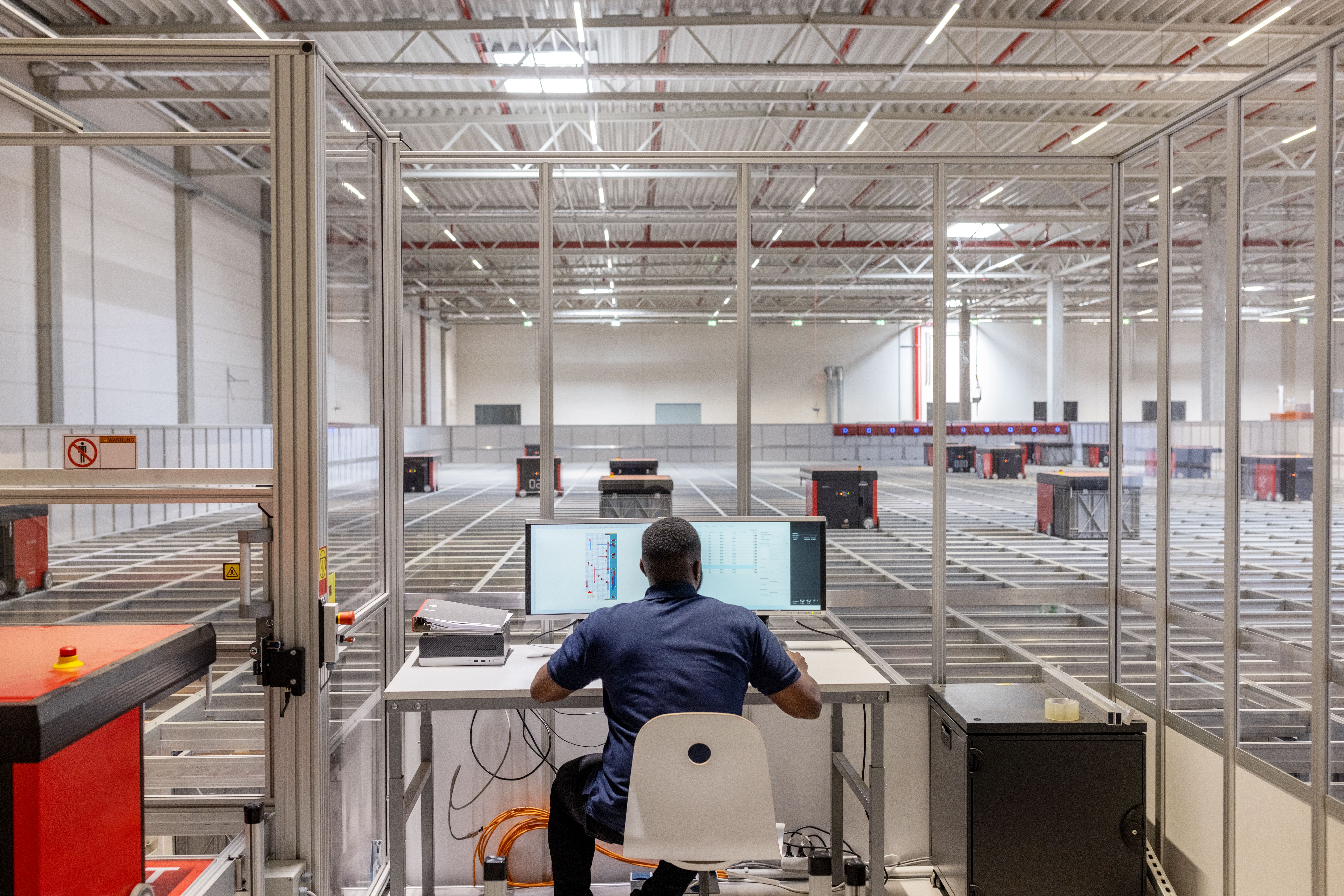
- Operating hour benchmarks vary by equipment type and application environment. Counterbalanced forklifts, covering electric, diesel, and LPG variants, carry an economic useful life typically between 10,000 and 20,000 hours. The fleet refresh process should begin around 12,000 hours, with a target replacement threshold of approximately 15,000 hours to account for lead times. Reach trucks, which face higher operating intensity than counterbalanced units, should be planned for replacement in the 10,000 to 15,000 hour range, with sourcing initiated around 10,000 hours.
- Pallet stackers and pallet trucks have shorter economic lifecycles than reach trucks, with replacement planned between 8,000 and 12,000 operating hours. Sideloaders run on a similar curve to counterbalanced forklifts at 15,000 to 20,000 hours, though application-specific conditions can shift that range. Conveyor and sortation systems are structured differently because their lifecycle is duty-cycle dependent rather than hours-driven, typically organized over 7 to 10 years based on throughput load and maintenance cadence. Automated guided vehicles and autonomous mobile robots operate on the shortest structures of all, typically 3 to 5 years, because technology evolution compresses practical useful life regardless of the hours logged.
Planning refreshes against operating hour thresholds also reduces supply chain risk. When you know you are replacing 40 units at a defined threshold, you can get ahead of manufacturer lead times and backlogs. The 2025 MHI and Deloitte Annual Industry Report identifies supply chain agility and resilience as one of the top five priorities for supply chain leaders. Proactive fleet lifecycle planning is one of the clearest operational expressions of that principle. Organizations that run equipment until failure have no such runway.
"When a Fortune 500 packaging manufacturer in the U.S. bundled their MHE tenders and shifted away from traditional capital expenditure, the results spoke for themselves — $2 million in savings in a single year. That is what a smarter approach to procurement and total cost of ownership actually looks like."
Simon Harrsen, EVP North America, CHG-MERIDIAN

What Should You Look for in a Material Handling Equipment Leasing Partner?
- The leasing partner you choose shapes not just your financing terms but your fleet strategy, your end-of-term options, and your access to equipment across manufacturers. Choosing the wrong partner is a multi-year commitment that can limit your options in ways that are not always visible at signing.
- MHE-specific expertise matters more than general equipment finance experience. A partner who understands useful life benchmarks, maintenance norms, fleet management dynamics, and residual value drivers for material handling equipment is a fundamentally different resource than a generalist lender. Independence is directly tied to this: a lessor tied to a specific manufacturer carries a financial incentive to steer sourcing and maintenance decisions in ways that benefit the manufacturer, not your operation. An independent partner lets you source from any manufacturer and select your own maintenance provider, which protects both your options and your total cost of ownership across the fleet.
- Strong remarketing capability is an underrated differentiator when evaluating leasing partners for warehouse and industrial equipment. A lessor who invests in building a secondary market for off-lease assets can price higher residual values into your equipment, which reduces your monthly payment. That residual value advantage is one of the clearest financial benefits of working with a partner who understands the secondary market for material handling equipment specifically.
Transparency in total cost is non-negotiable. Residual assumptions, end-of-term options, and early termination provisions matter as much as the payment itself. A credible leasing partner walks through all of it before the first contract is signed. Lifecycle management support, covering asset tracking, refresh planning, fleet analytics, and real-time visibility across leased equipment, is increasingly part of what a strong partner brings beyond the financing structure itself.

Is Your Current Fleet Strategy Ready for What is Coming?
- Material handling equipment is not a static purchase category. The technology is changing, compliance requirements are evolving, and the cost of running aging assets is rising. Organizations still defaulting to ownership are carrying a cost and risk exposure they may not fully see yet.
- The question is not whether leasing makes sense. It's whether your current refresh strategy is optimized for the operation you're running today — and the one you intend to run three years from now.
If you want to dig into what that looks like for your fleet, CHG-MERIDIAN's team specializes in exactly this kind of analysis — modeling total cost of ownership, building refresh schedules, and structuring leases that align with how your equipment is actually used.
Frequently Asked Questions About Material Handling Equipment Leasing
Is it better to lease or buy material handling equipment?
For most operations, leasing is the stronger choice. It preserves capital, converts unpredictable maintenance costs into a fixed monthly payment, and gives you a built-in exit before equipment starts costing more to run than it delivers in productivity. Buying makes sense only when equipment is highly specialized with no meaningful secondary market, or when useful life clearly exceeds any reasonable lease structure.
How long should a material handling equipment lease typically be?
Lease length depends on the equipment type and how it is used. Electric forklifts generally work well at 60 to 84 months calibrated to operating hours. Conveyor and sortation systems can extend to 84 to 120 months. Automated equipment such as AGVs and AMRs typically makes sense at 36 to 60 months, given how quickly that technology is advancing. The operating hours framework is more accurate than calendar time for any asset in multi-shift environments.
How do I know when it's time to refresh my warehouse equipment fleet?
Watch for three signals: maintenance costs climbing year over year, unplanned downtime disrupting throughput, and equipment that no longer meets current safety or emissions standards. If any of these are present, you are likely past the optimal exit window on that asset. Operating hour tracking gives you the earliest and most objective signal, independent of any single cost category.
What happens to the equipment at the end of a lease?
Your options at lease end depend on how the agreement was structured. Under a fair market value lease, you can return the equipment, renew the lease, or purchase at the appraised residual value. The return option is the most strategically useful for operations that want a clean transition to a refreshed fleet. End-of-term provisions should be clearly defined before you sign.
What is a fair market value lease and how does it work for material handling equipment?
A fair market value lease, also referred to as an FMV lease or operating lease, is a structure in which the lessor retains ownership of the equipment and assumes the residual value risk. Your payments cover the use of the asset during the term, not the full purchase price. At the end of the term, you return the equipment, renew at a new rate, or buy at fair market value. This structure keeps payments lower than a capital lease and preserves flexibility at lease end.
Can I lease different types of material handling equipment under the same agreement?
Yes. Multi-asset lease structures can cover forklifts, reach trucks, conveyor systems, and automated equipment under a single program. This simplifies administration, creates a unified refresh schedule, and can improve negotiating leverage. For enterprise operations managing both industrial equipment and IT infrastructure, a single lifecycle partner capable of covering both asset classes can further reduce complexity and total cost.
How does an independent lessor differ from a manufacturer-captive finance program?
A manufacturer-captive finance program is controlled by or financially aligned with a specific equipment brand. It is structured to support that manufacturer's sales and may limit your ability to source from competing brands or choose your own maintenance provider. An independent lessor has no manufacturer alignment, which means the advice you receive on sourcing, maintenance, and lifecycle planning is not shaped by an OEM's commercial interest.
Does leasing material handling equipment affect how we budget for fleet costs?
Leasing converts the variable and often unpredictable cost of owning aging equipment into a fixed monthly payment. That shift makes fleet costs significantly more foreseeable for finance and operations teams. It also removes the capital expenditure event that ownership requires at replacement time, replacing it with an ongoing operating expense line that budgets can plan around consistently.
What role does fleet data and asset tracking play in a leasing program?
Real-time visibility into operating hours, maintenance events, and asset condition is the foundation of proactive fleet lifecycle management. When that data is integrated with your lease structure, you can initiate refresh planning at the right operating hour threshold rather than reacting to equipment failures or unplanned downtime. Lifecycle management platforms that connect fleet data to lease terms make the total cost of ownership visible in real time, which is how the most operationally efficient fleets manage their equipment programs.
Get in Touch
Simon Harrsen leads CHG-MERIDIAN's North American operations, helping organizations optimize technology investments through smarter lifecycle management. Connect with him to discuss how your business can reduce costs and increase flexibility.

Simon Harrsen
Executive Vice President, North America
Learn more
Circular Tech Made for the AI Age
Learn how Fortune 500 organizations are utilizing lifecycle planning to harness the power of AI.
 Usage Models
Unlock your full potential by leasing technology and saving money and resources at the same time.
Usage Models
Unlock your full potential by leasing technology and saving money and resources at the same time.
 Employer Branding
Productivity also depends on employee satisfaction. So make sure you offer the right benefits.
Employer Branding
Productivity also depends on employee satisfaction. So make sure you offer the right benefits.