Key Takeaways
- Leasing reduces forklift TCO, but only when matched to the optimal usage cycle for each vehicle type and shift model.
- When leasing is paired with a Full-Service model, a 1.6-ton electric forklift in 2-shift operation costs approximately $163,800 over 8 years versus $174,300 under a purchase-with-Service-and-Repair model.
- Electric forklifts show consistent leasing savings across all scenarios analyzed. Diesel forklift savings depend more heavily on usage intensity and cycle length.
- In a direct comparison of 6 manual electric forklifts against 12 AGVs performing the same logistics task, AGVs reduced total 10-year costs by approximately $4.1 million, or 50%.
- The primary driver of AGV savings is labor: annual personnel costs drop from approximately $759,000 for a manually operated fleet to $69,000 with AGV-based automation.
- Leasing an AGV fleet rather than purchasing it produces an additional 5.8% savings over the asset lifecycle.
Download the full TUM Study:
Author: Philip Rosenmüller, Head of Fleet Management & Consulting, CHG-MERIDIAN
Updated: May 18, 2026
Author Bio: Philip Rosenmüller is Head of Fleet Management and Consulting at CHG-MERIDIAN, where he advises enterprise organizations on fleet economics, equipment lifecycle strategy, and total cost of ownership across industrial and material handling operations. His work has contributed to peer-reviewed academic research on forklift and intralogistics cost modeling, and his insights span fleet programs across Europe, North America, and global multi-site operations. He is a published and featured contributor in Supply and Demand Chain Executive, Modern Materials Handling, and Supply Chain Magazine.
What Is Forklift Total Cost of Ownership?
Forklift total cost of ownership is the sum of every dollar spent on a piece of equipment from acquisition through disposal. It is the most accurate basis for comparing purchasing versus leasing decisions, and it is the primary analytical framework used in the TUM study.
A complete forklift TCO calculation includes the following cost categories:
- Acquisition cost (purchase price or leasing rate)
- Battery and charger investment
- Maintenance, inspections, and repair costs, which increase annually with vehicle age and operating hours
- Energy costs, including electricity for electric forklifts and fuel for diesel-powered models
- Administrative costs, including forklift fleet management labor and licensing fees
- Capital costs, based on imputed interest rates and financing structure
- Disposal and end-of-life costs, offset by residual value where applicable
Most organizations track acquisition cost carefully but allow maintenance costs to accumulate without systematic analysis. This is where the gap between perceived cost and actual cost of ownership widens. A forklift that appears inexpensive at purchase can become the most expensive asset in the fleet by year six or seven, precisely when maintenance costs peak and residual value has largely evaporated.
Understanding forklift operating costs across the full lifecycle is what separates reactive fleet management from strategic fleet economics.
About the Research: CHG-MERIDIAN and TUM
The study, titled "TCO Calculation of Leasing Concepts in Intralogistics," was published in 2024 by the Chair of Materials Handling, Material Flow, and Logistics at the TUM School of Engineering and Design, Technical University of Munich. It was authored by Dr.-Ing. Andreas Ruecker, Laura Grohs, M.Sc., and Mathias Laile, M.Sc., under the editorship of Prof. Dr.-Ing. Johannes Fottner, who has held the Chair of Materials Handling, Material Flow, and Logistics at TUM since 2016. Philip Rosenmüller of CHG-MERIDIAN worked in close collaboration with the TUM research team, contributing the real-world fleet data and operational analysis that underpins the study's TCO calculations.
What makes this research different from typical vendor white papers is its data provenance. The real-world fleet data underpinning the TCO calculations was collected and analyzed by CHG-MERIDIAN in direct collaboration with the study authors. The data set draws from companies across multiple industries including automotive and vehicle manufacturing, electrical engineering, machinery and plant engineering, and consumer goods.
The study examined three distinct scenarios:
- Scenario I: TCO comparison of purchasing versus leasing forklift fleets (FFZs)
- Scenario II: TCO comparison of manual forklifts versus automated guided vehicles (AGVs) performing the same logistics task
- Scenario III: Outsourcing complete intralogistics operations through contract logistics
The analysis covered diesel forklifts, electric forklifts, electric high-lift trucks, and reach trucks at load capacities of 1.6 tons, 3.0 tons, and 5.0 tons. Service lives of 8, 10, and 12 years were modeled across both single-shift and double-shift operations. The dataset was generalized and not manufacturer-dependent, which means the findings apply broadly rather than favoring a specific OEM.
Note on Figures: All cost figures in the study are denominated in euros and based on European fleet and labor market data. USD equivalents in this article use a conversion rate of approximately $1.15 per euro (April 2026). The study's depreciation treatment follows HGB accounting standards, which differ from US GAAP in certain respects. CHG-MERIDIAN recommends consulting your finance team when applying these figures to a North American context. The directional findings and cost ratios are broadly applicable regardless of currency or accounting framework.
The maintenance and labor cost data in this study was gathered in 2024 -- since then, parts and labor costs have risen significantly across the industry, meaning the TCO gap between reactive ownership and structured leasing is likely wider today than these figures reflect.
When Forklift Leasing Reduces TCO -- and When It Does Not
The most important finding from Scenario I, total cost of ownership of purchasing versus leasing forklift fleets, is also the most nuanced. Forklift leasing does not automatically reduce total cost of ownership. The financial advantage of leasing depends on aligning the lease duration to the optimal usage cycle for each specific combination of vehicle type and shift model.
- When that alignment is achieved, leasing produced savings for every vehicle type in the study, including diesel forklifts, electric forklifts, electric high-lift trucks, and reach trucks.
- When the alignment is missed -- for example, holding a leased vehicle beyond its optimal cycle -- the cost advantage diminishes or disappears entirely.
The optimal usage cycle concept. Every forklift has an inflection point in its maintenance cost curve. Before that point, maintenance costs are manageable and relatively predictable. After it, costs begin to compound: repairs become more frequent, parts wear faster, and energy efficiency declines. At the same time, the vehicle's residual value continues to fall. Leasing allows operators to exit the fleet relationship before reaching that inflection point. The leasing provider recovers residual value through secondary market sales, and the customer re-enters a lease at the start of a new, low-maintenance cycle.
How this plays out by vehicle type. Electric forklift models showed consistent annual savings across every scenario in the study, regardless of load capacity, shift model, or service life. Diesel forklift savings were more variable: leasing was not cost-advantageous for diesel forklifts with 1.6-ton, 3-ton, and 5-ton loads at 8-year service lives in single-shift operation. This reflects the different maintenance cost trajectories of diesel versus electric powertrains.
The practical implication is that fleet managers should not evaluate leasing as a blanket policy. The right approach is a vehicle-by-vehicle analysis that identifies the optimal service life for each asset class in the fleet, and then structures the lease accordingly. This is precisely the kind of analysis that specialized fleet management providers perform as part of a managed leasing relationship.
The Service Model That Changes the Math: Full-Service vs. Service and Repair
Beyond the lease-versus-purchase question, the TUM study examined how the choice of service model affects forklift TCO. This is an underappreciated variable in fleet economics.
Scenario Ib compared two approaches for a 1.6-ton electric forklift in double-shift operation over 8 years:
- Purchase with a Service and Repair model, where maintenance costs are calculated based on actual usage
- Leasing with a Full-Service model, where all maintenance, repairs, spare parts, and vehicle replacement are covered by a fixed monthly rate
The results were clear. Under a purchase model with Service and Repair, the total cost of operating a 1.6-ton electric forklift over 8 years came to approximately $174,300, with an average annual cost of approximately $21,790. Battery replacement was required in Year 7, adding a significant unplanned cost spike to an already escalating maintenance curve. Annual costs were variable and rose steadily with vehicle age.
Under a leasing model with Full-Service, the same vehicle over the same period cost approximately $163,800, with an average annual cost of approximately $20,470. Because the lease included a full fleet exchange at Year 4, battery replacement was eliminated entirely. Annual costs remained fixed throughout the term, giving finance teams a predictable budget line from day one.
The battery replacement effect. One of the most significant financial events in the lifecycle of a purchased electric forklift is battery replacement, typically required around year seven. In the study, this cost is included in the maintenance figure for the purchased vehicle. Under the leasing model, a full fleet exchange occurs at the midpoint of the term (year four), which eliminates the need for battery replacement entirely. The customer starts the second half of the lease period with fresh equipment, fresh batteries, and a reset maintenance cost curve.
Cost stability as a financial planning tool. The Full-Service leasing model provides a contractually fixed price structure for the duration of the lease. This gives finance teams predictable budget lines and insulates the organization from unexpected repair costs or parts price inflation. For operations leaders managing tight margins, cost predictability has strategic value beyond the raw dollar savings.
Operational uptime. The Full-Service model includes replacement vehicles for the duration of major repairs, which keeps warehouse operations running without interruption. For high-volume distribution operations running double or triple shifts, unplanned downtime has a direct revenue impact that does not appear in the TCO calculation but compounds the value of a full-service arrangement.
"The purchase price conversation is largely irrelevant to long-term fleet economics. Operators who evaluate acquisition on total cost of ownership consistently arrive at a different decision than those focused on upfront spend. CHG-MERIDIAN contributed real-world fleet data to this research because we wanted the findings to reflect how equipment actually performs over its life."
Philip Rosenmüller, Head of Fleet Management & Consulting, CHG-MERIDIAN
AGVs vs. Manual Forklifts: The Labor Cost Equation
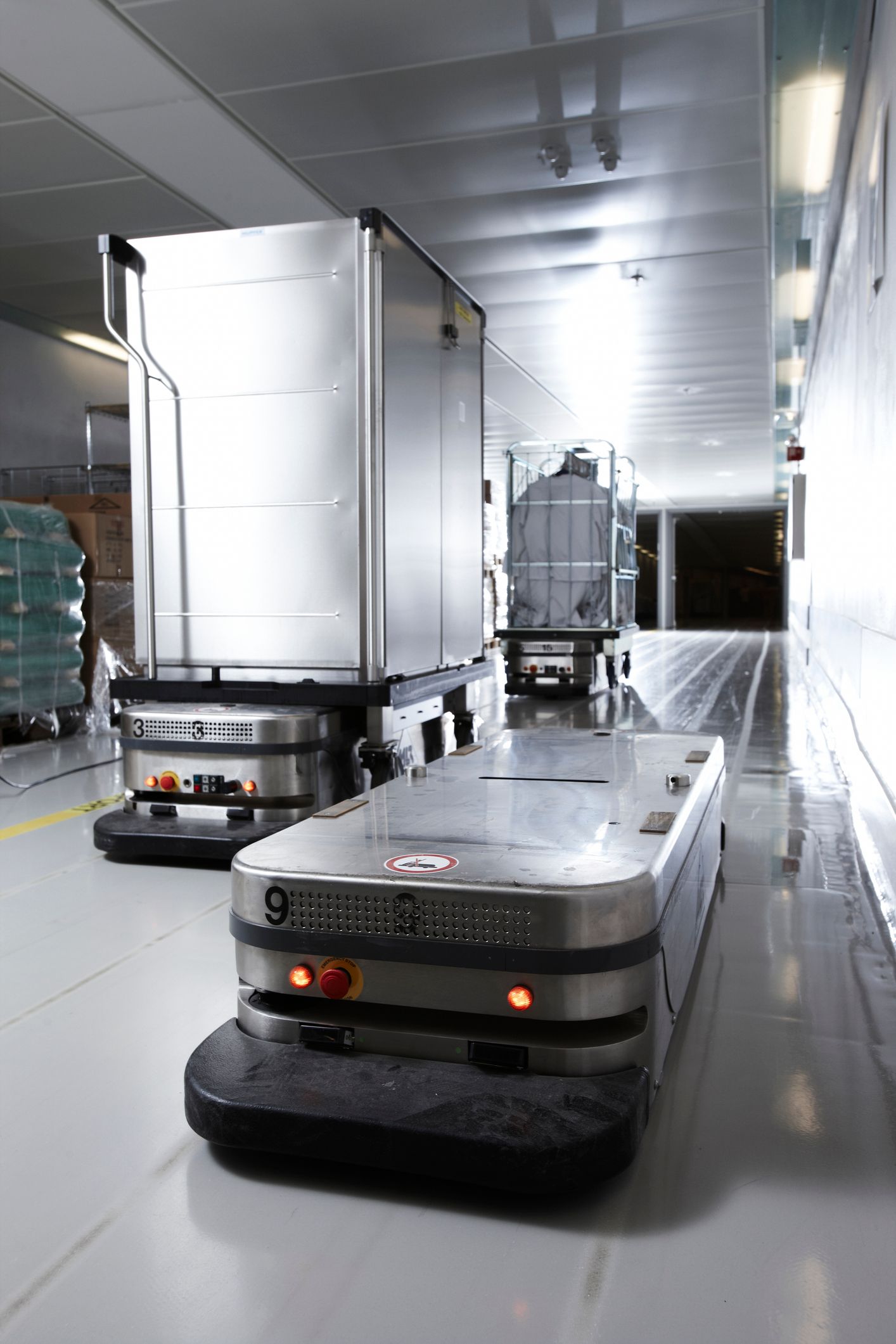
Scenario II of the TUM study compared the total cost of ownership for a manual electric forklift fleet against an equivalent AGV fleet performing the same intralogistics task. The findings are the most striking in the entire study.
- The reference scenario: six 1.6-ton electric high-lift trucks used for grid box handling in double-shift operation, compared against twelve 1.6-ton AGVs performing the same task. The comparison covers a 10-year period, with both fleets modeled under leasing rather than purchase.
The cost breakdown across the 10-year period tells the story clearly.
- For the manual forklift fleet, average annual costs broke down as follows: leasing rates of approximately $23,700, maintenance of approximately $17,300, energy of approximately $9,200, and personnel costs of approximately $759,000, bringing the total annual cost to approximately $809,200.
- For the AGV fleet, the equipment costs were substantially higher: leasing rates of approximately $199,800 per year, maintenance of approximately $96,500, and energy of approximately $16,600. However, personnel costs fell to approximately $69,000 per year, reducing total annual cost to approximately $381,900.
The gap is personnel. Every other cost category is higher for AGVs. Labor is the variable that reverses the equation entirely, and it does so from the first year of operation.
The math is not subtle. Manual forklifts require one operator per vehicle per shift. At six vehicles in a double-shift model, that is twelve full-time operators. Using the study's European labor benchmark of approximately $63,000 per operator annually including fringe benefits, personnel costs for the manual fleet reach approximately $759,000 per year.
The AGV fleet requires 0.5 employees per shift for control station monitoring and oversight. Total personnel cost for the AGV scenario is approximately $69,000 per year. For more info on AGV leasing, read CHG-MERIDIAN's guide.
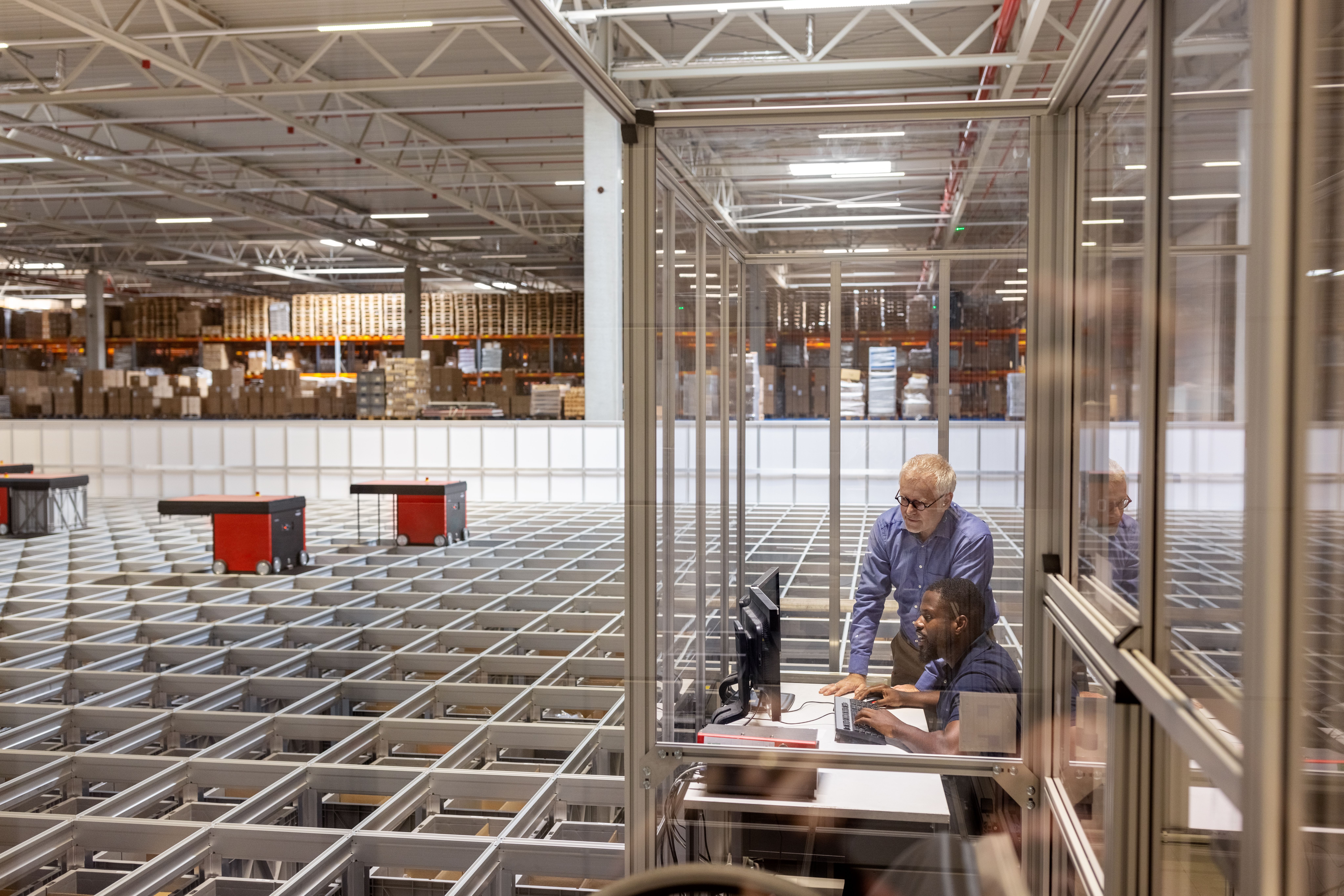
AGV savings begin in year one. Unlike many automation investments that require years to recoup upfront capital, the AGV fleet in the study produced a TCO advantage over the manual fleet from the first year of operation. This is because the labor savings immediately and substantially outweigh the higher leasing rates and maintenance costs associated with AGVs.
The 10-year picture. Over the full 10-year service life, the AGV fleet produced cumulative savings of approximately $4.1 million, representing a 50% reduction in total cost of ownership compared to the manual forklift fleet.
Leasing AGVs versus buying them. Within the AGV scenario, the study also compared the cost of leasing the AGV fleet against purchasing it outright. Leasing produced an additional $247,000 in savings over the lifecycle, or 5.8%. This reflects the same principle at work in the forklift comparison: predictable rates, fleet exchange at optimal cycle, and the transfer of residual value risk to the leasing provider.
Important caveat from the researchers. The study acknowledges that these findings reflect a specific logistics scenario. AGV automation is not cost-effective in every application. The degree of savings depends heavily on shift intensity, task type, fleet size, and facility layout. A case-by-case TCO analysis by CHG-MERIDIAN is recommended before any automation decision. For a deeper look at AGV financing structures and how to evaluate automation ROI for your specific operation, see our guide to AGV and AMR financing.
About This Research
This article is based on the 2024 study "TCO Calculation of Leasing Concepts in Intralogistics," authored by Dr.-Ing. Andreas Ruecker, Laura Grohs, M.Sc., and Mathias Laile, M.Sc., and edited by Prof. Dr.-Ing. Johannes Fottner, Chair of Materials Handling, Material Flow, and Logistics at the Technical University of Munich (TUM). The real-world fleet data underpinning the TCO calculations was collected and analyzed by CHG-MERIDIAN in collaboration with the study authors.
CHG-MERIDIAN is a global leader in technology lifecycle management and equipment leasing, serving enterprise clients across North America, Europe, and Asia-Pacific.
Cost data in this study was gathered in 2024. Given rising parts and labor costs since then, the TCO advantage of structured leasing is likely even greater today.

What This Means for Your Fleet Strategy
The TUM study makes a clear commercial argument, but it is worth stating plainly what that argument is and is not. It is not that leasing is always cheaper than buying. The data shows this is false in specific configurations, particularly for diesel forklifts in low-intensity single-shift operations with short service lives.
What the data does show is that structured leasing, matched to the right usage cycle and paired with an appropriate service model, consistently produces a lower total cost of ownership than ownership in most high-utilization scenarios. And when automation through AGVs is part of the conversation, the economics shift dramatically -- driven not by equipment cost, but by labor.
The residual value mechanism. At the heart of the leasing advantage in this study is a straightforward financial mechanism. When you purchase a forklift, you absorb the full cost of depreciation. The asset loses value on your balance sheet, and you bear all the risk of owning equipment that has declined in worth. Under an FMV (fair market value) lease structure, the leasing provider retains residual value risk. You pay for the productive use of the asset during the lease term, not for its ultimate ownership. At the end of the term, you return the equipment, refresh your fleet, and start the cost curve over.
Fleet management as a discipline, not just a service. The TUM study notes that many organizations lack the internal expertise to calculate TCO accurately or to identify the optimal usage cycle for their equipment mix. This knowledge gap is itself a cost: organizations that hold equipment too long, service it reactively, or replace it on arbitrary timelines rather than optimal ones are paying more than they should. A specialized leasing provider, like CHG-MERIDIAN, with fleet management capabilities brings the analytical infrastructure to close that gap.

Frequently Asked Questions: Forklift Total Cost of Ownership
What is the total cost of ownership for a forklift?
Forklift total cost of ownership is the complete financial cost of an asset across its operational life. It includes acquisition or leasing costs, maintenance and repair, energy, battery replacement, administrative overhead, capital costs, and residual or disposal value. TCO is the most accurate metric for comparing purchase versus leasing decisions for forklift fleets because it captures costs that the purchase price alone does not reflect.
Is it cheaper to lease or buy a forklift?
According to the 2024 TUM study conducted in collaboration with CHG-MERIDIAN, leasing is cheaper than buying when the lease is matched to the optimal usage cycle for each vehicle type and shift model. At the optimal cycle, leasing produced TCO savings for every vehicle type in the study. However, leasing is not automatically cheaper in all configurations. Low-intensity single-shift diesel forklift operations showed less consistent savings than high-intensity electric forklift scenarios. A vehicle-by-vehicle TCO analysis is the right way to evaluate this decision for your fleet.
What is the optimal forklift replacement cycle?
The optimal forklift replacement cycle is the point at which the vehicle's rising maintenance costs and declining residual value make continued operation more expensive than fleet exchange. This inflection point varies by vehicle type, powertrain (electric versus diesel), and shift intensity. The Technical University of Munich and CHG-MERIDIAN study found that optimal service lives in the scenarios analyzed ranged from 8 to 12 years depending on these variables. Leasing provides a built-in mechanism to exit at the optimal cycle without absorbing the residual value loss associated with ownership.
How do AGVs compare to forklifts on total cost of ownership?
In the Technical University of Munich and CHG-MERIDIAN study scenario, automated guided vehicles (AGVs) reduced total 10-year cost of ownership by approximately 50% compared to an equivalent manual forklift fleet performing the same task. The primary driver is labor: the study scenario showed annual personnel costs of approximately $759,000 for a six-vehicle manual fleet versus $69,000 for the AGV alternative. AGV leasing rates, maintenance costs, and energy costs are all higher than those of manual forklifts, but the labor offset is large enough to produce savings from the first year of operation.
What is the difference between Full-Service and Service and Repair forklift leasing?
A Full-Service lease includes all maintenance, repairs, spare parts, and in some cases vehicle replacement within a fixed monthly rate. A Service and Repair model calculates costs based on actual usage, giving more flexibility in low-utilization scenarios but exposing the operator to cost variability as the vehicle ages. The Technical University of Munich and CHG-MERIDIAN study found that pairing leasing with a Full-Service model for a 1.6-ton electric forklift in double-shift operation produced total 8-year costs of approximately $163,800, versus approximately $174,300 for a purchased vehicle under Service and Repair. The Full-Service model also eliminates the year-seven battery replacement cost by triggering a fleet exchange at the four-year midpoint.
How do I calculate forklift total cost of ownership?
A complete forklift TCO calculation requires the following inputs: acquisition or leasing cost, battery and charger costs, annual maintenance costs modeled to increase with vehicle age, energy costs based on powertrain type and usage hours, administrative costs including fleet management labor, capital costs based on financing structure, and residual or disposal value at end of life. The Technical University of Munich study used a simulation model incorporating all of these variables, calibrated with real-world fleet data from CHG-MERIDIAN. For most organizations, building this model internally requires fleet management expertise that is not always available in-house. CHG-MERIDIAN provides TCO analysis as part of its fleet leasing engagement process.
How does forklift leasing affect residual value?
Under a fair market value (FMV) lease structure, the leasing provider retains residual value risk rather than the operator. When a purchased forklift depreciates, the loss in asset value falls on the buyer. When a leased forklift depreciates, the leasing provider absorbs that loss and recovers residual value through secondary market sales or repurposing. This mechanism allows operators to pay for productive use of the equipment rather than for ownership of a depreciating asset.
Get in Touch
Simon Harrsen leads CHG-MERIDIAN's North American operations, helping organizations optimize technology investments through smarter lifecycle management. Connect with him to discuss how your business can reduce costs and increase flexibility.

Simon Harrsen
Executive Vice President, North America
More ways to stay connected
Learn more
 Guide: Leasing Material Handling Equipment
Leasing material handling equipment is less about financing and more about building a strategy that keeps your operation competitive without locking up capital.
Guide: Leasing Material Handling Equipment
Leasing material handling equipment is less about financing and more about building a strategy that keeps your operation competitive without locking up capital.
 Forklift Fleet Management for Large Operations
This guide is written for operations, logistics, and procurement leaders managing material handling equipment at scale.
Forklift Fleet Management for Large Operations
This guide is written for operations, logistics, and procurement leaders managing material handling equipment at scale.
 Remarketing for Industrial
What do you do with your industrial technology at the end of its useful life? Are you using the option to remarket it? Learn how to implement an efficient remarketing solution that is both cost-efficient and sustainable.
Remarketing for Industrial
What do you do with your industrial technology at the end of its useful life? Are you using the option to remarket it? Learn how to implement an efficient remarketing solution that is both cost-efficient and sustainable.