


 Circular Tech Made for the AI Age
Learn how Fortune 500 organizations are utilizing lifecycle planning to harness the power of AI.
Circular Tech Made for the AI Age
Learn how Fortune 500 organizations are utilizing lifecycle planning to harness the power of AI.
Key Takeaways
- IT lifecycle management covers six stages -- planning and budgeting, procurement, deployment, monitoring and maintenance, refresh and upgrade, and decommissioning -- each representing a financial decision as much as an operational one
- Unmanaged lifecycles are expensive in ways that don't show up on a single line item -- emergency replacements, security incidents from aging hardware, and compliance failures tied to improper disposal all compound over time
- Hardware refresh timelines should be proactive, not reactive -- laptops and endpoints every 3 to 4 years, servers every 4 to 6 years, networking equipment every 5 to 7 years; organizations that lease tend to refresh on schedule because timing is built into the agreement
- Leasing converts unpredictable capital expenditure into fixed operating costs and transfers decommissioning responsibility -- including certified data erasure -- to the lessor, removing that burden from internal IT teams
- CHG-MERIDIAN's tesma platform connects the financial and technical sides of lifecycle management in one system -- lease schedules, refresh timelines, asset tracking, and IFRS-compliant financial reporting across all locations and departments
Author: Simon Harrsen, EVP North America, CHG-MERIDIAN
Updated: May 11, 2026
Author Bio: Simon Harrsen has built his career at the intersection of technology and equipment finance, working across Europe, North America, and South America to help enterprise organizations structure smarter approaches to IT and industrial asset acquisition. As Executive Vice President, North America at CHG-MERIDIAN, he brings particular depth in IT equipment financing and the lifecycle economics that determine whether organizations own, lease, or refresh their technology on the right terms. His work has been published and featured in Channel Insider, Monitor Daily, and Equipment Finance News.

What Is IT Lifecycle Management?
IT lifecycle management is the end-to-end process of planning, deploying, maintaining, and retiring technology assets in a way that aligns with business goals and controls costs. It covers the full journey of hardware — from the initial decision to procure a laptop, server, or networking device, through active use, and ultimately to secure decommissioning.
It is worth distinguishing IT lifecycle management from IT asset management (ITAM). ITAM primarily tracks what assets exist and where they are. IT lifecycle management goes further — it adds strategic layers around procurement planning, performance monitoring, refresh cycles, and responsible disposal. For enterprise organizations managing thousands of endpoints, servers, and networking devices across multiple locations, that distinction matters significantly.

The Key Stages of IT Asset Lifecycle Management
A structured IT asset lifecycle management framework typically follows six stages. For enterprise IT and finance leaders, each stage represents a financial decision as much as an operational one.
1. Planning and Budgeting. Before any hardware is purchased, organizations need to assess current inventory, identify gaps, and forecast future needs. Poor planning at this stage leads to overprovisioning, redundant purchases, and budget overruns down the line. A solid IT procurement strategy starts here.
2. Procurement and Allocation. This stage involves vendor selection, contract negotiation, and getting the right hardware to the right teams. Standardizing hardware across the organization at this point reduces support complexity and total cost of ownership significantly.
3. Deployment and Configuration. Hardware must be configured, secured, and integrated into existing infrastructure before it delivers any value. For enterprise organizations, this stage includes endpoint provisioning, network integration for servers and networking equipment, and updating asset records in your CMDB or ITAM system.
4. Monitoring, Maintenance, and Support. The longest phase of the lifecycle. Active hardware needs regular patching, performance monitoring, and proactive maintenance to stay secure and functional. Deferred maintenance at this stage is one of the most common drivers of unplanned hardware replacement costs.
5. Refresh and Upgrade. Hardware ages, processing speeds slow, security patches become unavailable, and performance no longer meets business demands. Proactive hardware lifecycle management means planning refresh cycles in advance — not reacting when devices start failing.
6. Decommissioning and Disposal. End-of-life hardware must be retired securely. Data sanitization, compliant disposal, and inventory updates are all required. Mishandled decommissioning creates both security and regulatory risk, particularly for enterprises operating under GDPR or other data protection frameworks.

The Hidden Costs of Unmanaged IT Lifecycles
When enterprise organizations lack structured hardware lifecycle management, costs accumulate in ways that rarely appear on a single line item.
- Emergency replacement costs. Unplanned hardware failures force rushed procurement at full market price, without the negotiating leverage that comes with planned refresh cycles. Organizations managing reactive replacement cycles routinely pay 20 to 40 percent more per unit than those buying on a planned schedule.
- Security exposure from aging hardware. Endpoints and servers running beyond their supported patch lifecycle become attack surfaces. According to IBM's 2024 Cost of a Data Breach Report, the average cost of a security breach is $4.88 million, reflecting not just remediation costs but regulatory penalties, lost productivity, and reputational damage.
- Compliance risk at end of life. Improper data disposal on decommissioned hardware can trigger regulatory fines under GDPR, HIPAA, and other frameworks. Organizations without a structured decommissioning process often discover this risk only after an audit.
- Shadow IT. Untracked hardware operating outside governance frameworks creates exposure that is invisible until it becomes a problem. Without a centralized asset inventory, devices accumulate outside your ITAM system, particularly in distributed or hybrid environments.
- Compounding total cost of ownership. The purchase price of enterprise hardware is rarely its true cost. Maintenance contracts, support escalations, downtime, emergency replacements, and disposal fees compound across a device's lifetime. Organizations that manage IT asset lifecycle management proactively consistently see lower total cost of ownership than those operating reactively, not because they spend less upfront, but because they eliminate the cost categories that grow when no one is watching.

IT Lifecycle Management: Leasing vs. Buying vs. Managed Services
Enterprise IT teams typically choose between three models for hardware acquisition and lifecycle management. Each has a different cost profile, risk distribution, and operational burden.
- Outright purchase. The organization owns the asset, controls refresh timing, and absorbs all maintenance, support, and disposal costs. Total cost of ownership is highest over the asset's life because all risk sits with the buyer. Refresh cycles are often delayed because capital budget approval is a separate process from operational need.
- Hardware leasing. Ownership stays with the lessor. The organization pays a fixed monthly cost for a defined term, with refresh timing built into the contract. Maintenance and disposal responsibility transfers in part or fully to the leasing partner depending on the agreement. Total cost of ownership is more predictable, and the lifecycle is structurally managed rather than left to internal planning cycles.
- Managed IT services. A third-party provider manages both the hardware and the IT operations around it, covering support, patching, monitoring, and refresh. Cost is highest in this model but operational burden on internal IT is lowest. Best suited to organizations with limited internal IT capacity.
- For most enterprise organizations with established IT teams, hardware leasing sits in the optimal middle ground. It reduces total cost of ownership versus outright ownership, preserves internal control over IT operations, and removes the lifecycle management burden that ownership creates, without the full cost of a managed services model.
How Hardware Leasing Simplifies IT Lifecycle Management
This is where most conversations about IT lifecycle management stop short. The majority of guidance focuses on processes and software tools — but the financial model behind how hardware is acquired and retired has an enormous impact on how manageable the lifecycle actually is.
For enterprise organizations leasing laptops, endpoints, servers, and networking equipment, the lifecycle model becomes structurally simpler.
Here is why:
Predictable costs replace unpredictable capital expenditure. Leasing converts large, irregular hardware purchases into fixed, predictable operating expenses. For finance leaders, this means more accurate budgeting and no surprise capital requests when a refresh cycle arrives.
Refresh cycles are built in. One of the most common failures in hardware lifecycle management is delayed refresh — organizations hold onto aging equipment too long because the capital budget for replacement hasn't been approved. With a leasing model, refresh timing is agreed at the outset. When the lease term ends, hardware is returned and replaced, eliminating the internal debate entirely.
Decommissioning is handled by the lessor. Secure data sanitization and responsible hardware disposal are significant operational burdens for enterprise IT teams. A leasing partner assumes responsibility for compliant end-of-life processing, removing that workload from internal teams and reducing the compliance risk associated with improper disposal.
It supports sustainability goals. Returned hardware can be refurbished and redeployed rather than sent to landfill. For enterprises with ESG commitments, leasing supports circular IT principles — maximizing asset use across multiple lifecycles rather than retiring hardware prematurely.
IT teams focus on strategy, not hardware logistics. When lifecycle milestones — procurement, refresh, and disposal — are managed through a leasing framework, IT teams spend less time on hardware administration and more time on the infrastructure decisions that drive business performance.
"The biggest cost in enterprise IT isn't the hardware — it's the unplanned replacement, the emergency procurement, and the aging devices that nobody budgeted to retire. A structured lifecycle approach with the right leasing partner eliminates all three."
Simon Harrsen, EVP North America, CHG-MERIDIAN
IT Lifecycle Management Best Practices
Regardless of how hardware is financed, these practices improve lifecycle outcomes for enterprise organizations.
Centralize your asset inventory. You cannot manage what you cannot see. A single, real-time inventory of all hardware across endpoints, servers, and networking equipment is the foundation of effective IT asset lifecycle management.
Automate tracking and alerts. Manual tracking introduces errors and delays. ITAM platforms with automated alerts for warranty expirations, end-of-support dates, and maintenance schedules reduce the risk of assets falling through the cracks.
Plan refresh cycles proactively. Build hardware refresh timelines into your annual planning cycle. Reactive replacement consistently costs more than planned refresh, both in hardware costs and productivity lost to failing equipment.
Align lifecycle decisions with business goals. Hardware investments should map to where the business is going, not just where it has been. Expansion plans, workforce changes, and infrastructure upgrades all affect what hardware is needed and when.
Choose a leasing partner who manages lifecycle milestones with you. The right IT equipment leasing partner does more than provide hardware. They bring visibility into refresh timing, end-of-lease planning, and responsible disposal — functioning as an extension of your lifecycle management process rather than simply a financing source.
Simplify IT Lifecycle Management With tesma
Knowing your lifecycle framework is one thing. Having the IT asset management software to execute it across thousands of devices and multiple locations is another.
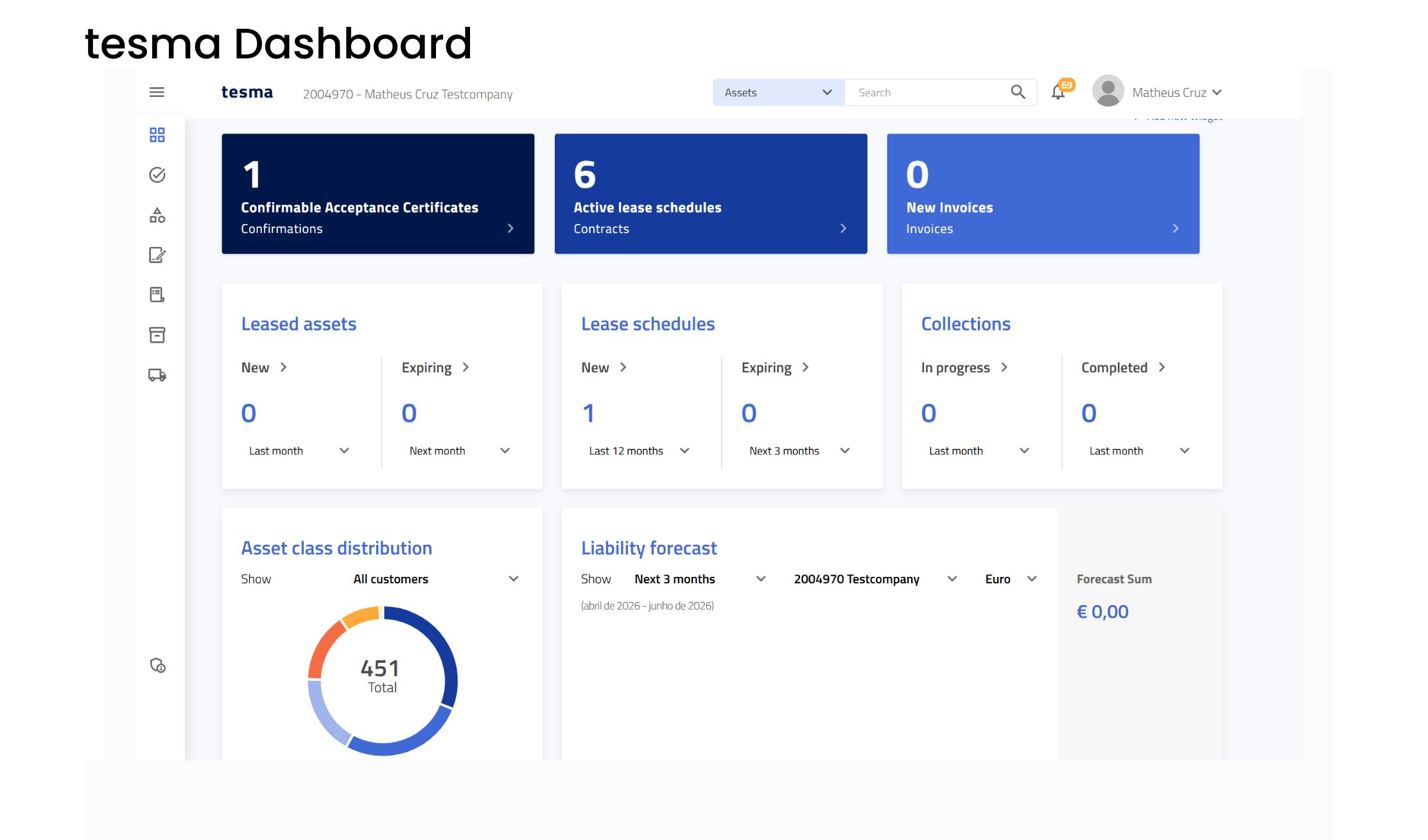
tesma is CHG-MERIDIAN's proprietary IT asset management platform, built specifically for enterprise organizations managing complex hardware environments. It gives IT and finance teams complete visibility across the entire asset lifecycle — from procurement approval and rollout through active monitoring and secure end-of-life processing — all from a single centralized system.
As an IT asset management solution, tesma handles the operational detail that lifecycle management requires:
- Real-time asset tracking across all locations and departments
- Automated procurement workflows and self-service ordering for end users
- Financial reporting with IFRS-compliant accounting and EDI invoice integration
- Certified data erasure and full audit trails at end of life
For enterprises leasing hardware through CHG-MERIDIAN, tesma connects the financial and technical sides of lifecycle management in one place. Lease schedules, refresh timelines, capacity planning, and cost allocation are all visible and manageable without switching between systems.
The result is an IT asset management platform that removes administrative burden, reduces human error, and gives decision-makers the data they need at every stage of the hardware lifecycle.

Frequently Asked Questions
What is IT lifecycle management?
IT lifecycle management is the structured process of overseeing hardware and technology assets from planning and procurement through active use, maintenance, and eventual retirement. It ensures that IT investments align with business goals, stay secure, and are replaced or disposed of at the right time.
What are the stages of IT asset lifecycle management?
The core stages are planning and budgeting, procurement, deployment, monitoring and maintenance, refresh and upgrade, and decommissioning. Each stage involves both operational and financial decisions that affect total cost of ownership.
What is the difference between ITAM and IT lifecycle management?
ITAM focuses on tracking and managing assets throughout their existence in an organization. IT lifecycle management builds on ITAM by adding strategic planning, procurement decisions, refresh cycles, and compliant disposal — it is the broader framework within which ITAM operates.
How does hardware leasing reduce total cost of ownership in IT lifecycle management?
Leasing replaces unpredictable capital expenditure with fixed operating costs, builds refresh cycles into the contract term, and transfers decommissioning responsibility to the lessor. Together these factors reduce emergency replacement costs, administrative overhead, and disposal risk — all of which contribute to a lower total cost of ownership over the asset's life.
How often should enterprise organizations refresh their IT hardware?
Refresh timelines vary by hardware type. Laptops and endpoints should be refreshed every 3 to 4 years, servers every 4 to 6 years, and networking equipment every 5 to 7 years. Delaying beyond these windows typically results in rising maintenance costs, security exposure from unsupported hardware, and productivity loss from aging devices. Organizations that lease hardware tend to refresh more consistently — often every 24 to 36 months — because refresh timing is built into the lease agreement rather than dependent on capital budget availability.
What is the difference between IT lifecycle management and managed IT services?
IT lifecycle management is a framework for how your organization plans, deploys, maintains, and retires hardware. Managed IT services outsource both the hardware and the IT operations around it to a third party. Leasing sits between the two — it transfers hardware ownership and lifecycle responsibility to a lessor, while leaving IT operations and strategic decisions in the hands of your internal team.
What software do I need for IT lifecycle management?
The core requirement is an IT asset management platform that tracks hardware across its full lifecycle — from procurement approval through active deployment, maintenance scheduling, and end-of-life processing. For enterprises leasing hardware through CHG-MERIDIAN, tesma provides this capability in a single system, with lease schedules, refresh timelines, and financial reporting integrated alongside asset tracking.
How does IT lifecycle management reduce security risk?
Structured lifecycle management reduces security risk in two ways. First, it ensures hardware stays within its supported patch window — aging devices running unsupported operating systems or firmware are a primary attack vector in enterprise environments. Second, a structured decommissioning process with certified data erasure prevents sensitive data from remaining on retired devices, which is one of the most common sources of compliance exposure.
How do I build a business case for IT lifecycle management investment?
The strongest business case anchors on total cost of ownership rather than upfront cost. Calculate your current spend on emergency replacements, unplanned downtime, extended maintenance contracts on aging hardware, and disposal costs. Compare that against a structured lifecycle model with planned refresh cycles. For most enterprise organizations, the reactive cost categories alone justify the investment — before any efficiency or security benefits are factored in.
Get in Touch
Simon Harrsen leads CHG-MERIDIAN's North American operations, helping organizations optimize technology investments through smarter lifecycle management. Connect with him to discuss how your business can reduce costs and increase flexibility.

Simon Harrsen
Executive Vice President, North America
Stay Connected
Learn more
Circular Tech Made for the AI Age
Learn how Fortune 500 organizations are utilizing lifecycle planning to harness the power of AI.
 Usage Models
Unlock your full potential by leasing technology and saving money and resources at the same time.
Usage Models
Unlock your full potential by leasing technology and saving money and resources at the same time.
 Employer Branding
Productivity also depends on employee satisfaction. So make sure you offer the right benefits.
Employer Branding
Productivity also depends on employee satisfaction. So make sure you offer the right benefits.