
Author: Simon Harrsen, Executive Vice President North America, CHG-MERIDIAN
Published: April 1, 2026


The Pressure Building Underneath Enterprise Infrastructure Right Now
Global IT spending is projected to reach $6.15 trillion in 2026, growing nearly 11% year-over-year, according to Gartner. The majority of that growth is concentrated in AI-optimized hardware and cybersecurity. Both require infrastructure that most organizations do not currently have.
Three forces are converging to make this a more pressing decision in 2026 than in prior years:
- AI infrastructure demand. Server spending is forecast to increase 36.9% year-over-year in 2026, driven almost entirely by AI-optimized hardware, according to Gartner. Existing infrastructure in most enterprises was not designed to support these workloads, and the gap between what is installed and what is required is widening.
- Memory price volatility. According to TrendForce, average DRAM prices rose approximately 53% in 2024 and a further 35% in 2025. Server DRAM contract prices are projected to increase as much as 90 to 95% quarter-over-quarter in early 2026 as hyperscalers absorb global supply. Hardware budgeted under prior pricing assumptions is now materially more expensive to procure.
- End-of-life pressure. Hardware reaching equipment end of life does not simply stop working. It stops receiving security patches, vendor support, and compatibility updates. Windows 10 reached end of support in October 2025, creating an active endpoint refresh mandate for organizations that had not already acted. Continuing to run unsupported hardware and software is a cost and security decision, not a neutral deferral.
What IT Infrastructure Modernization Actually Involves
The term is used broadly, but the scope varies by organization. For most enterprises, an IT infrastructure upgrade touches some combination of the following:

Compute and Server Infrastructure
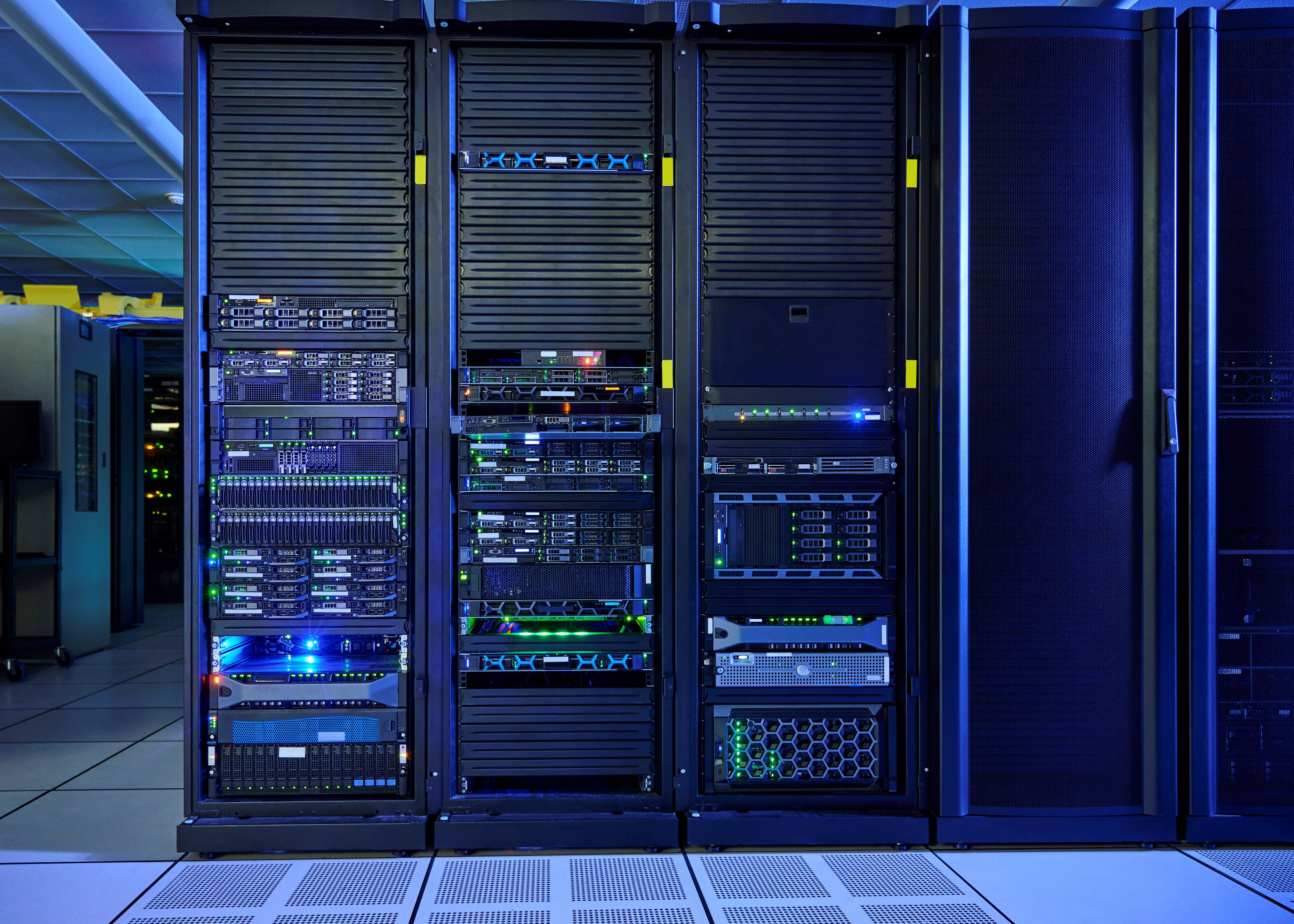
Physical and virtual servers form the core of enterprise compute. Modernizing this layer typically means retiring hardware past its useful life, consolidating underutilized servers through virtualization, and in some cases migrating workloads to private or hybrid cloud architectures. Cloud migration alone is not always the answer. According to IDC, 75% of enterprise AI workloads are projected to run on hybrid infrastructure that includes on-premises components by 2028.
Network Infrastructure
According to the Verizon 2025 Data Breach Investigations Report, exploitation of vulnerabilities as an initial access vector surged 34% year-over-year, with attacks targeting edge devices and VPNs growing nearly eightfold. Organizations that failed to patch those perimeter vulnerabilities left a door open that attackers walked through at scale, underscoring why network infrastructure modernization has become a security imperative, not just a performance consideration.

End-User Devices and Endpoints
Laptops, desktops, and mobile devices have a defined useful life. Running devices past that window means increased helpdesk burden, slower employee performance, and mounting security exposure as operating system support cycles end. The Windows 10 end-of-support deadline in October 2025 is the most recent example of a vendor-defined forcing function that turns a deferred refresh decision into an active compliance and security problem.
Storage and Data Infrastructure
Data volumes are growing faster than legacy storage architectures were designed to handle. Modernizing storage involves transitioning from spinning disk to solid-state, adopting tiered storage strategies, and aligning capacity with actual workload patterns rather than peak-demand buffers that inflate TCO.

The Real Cost of Not Modernizing
The argument for deferring an IT infrastructure upgrade typically centers on budget preservation. The problem is that deferral does not eliminate cost. It shifts cost into a less visible category where it becomes harder to measure and harder to control.
Legacy hardware accumulates cost in multiple ways simultaneously: rising maintenance contracts as components age out of standard support, increasing helpdesk load as performance degrades, security remediation costs as unpatched vulnerabilities are exploited, and productivity loss as employees work around aging systems. None of these appear as a single line item in the IT budget. Together, they frequently exceed the cost of a structured modernization program.
According to IBM's 2025 Cost of a Data Breach Report, the average cost of a data breach stands at $4.44 million globally, with ransomware and extortion incidents averaging $5.08 million. Legacy systems that are no longer receiving security patches are disproportionately represented in breach incident data. At that cost per incident, one avoided breach can justify years of infrastructure investment.
Three Ways Enterprises Fund Infrastructure Modernization
1. Capital Purchase
- Buying hardware outright preserves full ownership and control. You own the asset, can depreciate it under applicable tax provisions, and carry no contractual obligations to a third party at end of term. The tradeoff is capital commitment. A full infrastructure upgrade across servers, networking, and endpoints for a mid-sized enterprise can represent millions of dollars in upfront expenditure. It also places the full burden of ITAD, residual value management, and end-of-life planning on the organization.
2. IT Hardware Leasing
- IT hardware leasing converts capital expenditure into a predictable monthly operating cost. Under a fair market value lease structure, the lessor retains the depreciation risk and the residual value of the equipment at end of term. The enterprise uses the equipment through its productive life, returns it at lease end, and refreshes to current technology without carrying stranded assets on its books.
This structure matters specifically for infrastructure modernization because IT assets depreciate quickly. Hardware valued at $500,000 today may carry 20 to 30 cents on the dollar in residual value after three to four years. Under a capital purchase model, that depreciation risk belongs entirely to the organization. Under a fair market value lease, it belongs to the lessor.
3. Managed Services and As-a-Service Models
- Device as a Service and Infrastructure as a Service models bundle hardware, software, support, and lifecycle management into a subscription fee. These models reduce internal IT management overhead and shift operational burden to the provider. The tradeoff is reduced customization control and, depending on the configuration, higher total cost over a multi-year horizon compared to structured leasing.

Why Leasing Works Structurally for Infrastructure Modernization
The financial case for IT hardware leasing goes beyond payment structure. The structural advantage is lifecycle alignment.
Enterprise IT equipment has a natural useful life. Servers typically perform well for three to five years. End-user devices carry a similar window. When organizations buy hardware outright, they frequently hold it longer than its useful life because the capital was already committed and replacement requires a new budget cycle. The gap between the end of useful life and actual retirement is where costs accelerate and security exposure grows.
A fair market value lease is structured around the useful life of the equipment from the start. The lease term mirrors the productive window. At end of term, the organization returns the equipment, the lessor manages residual value and end-of-life processing, and the enterprise refreshes to current technology on schedule. The modernization cycle becomes planned, predictable, and built into the operating budget rather than dependent on periodic capital approvals.
For organizations operating in the current environment, where DRAM prices are rising sharply and AI workloads are demanding more capable hardware faster, the FMV lease structure provides a practical hedge. When the lease term ends and technology requirements have shifted, the organization is not holding depreciated hardware purchased at peak pricing. It has optionality.
How to Evaluate IT Infrastructure ROI Before You Commit
IT infrastructure ROI is not a single number. It is a framework that weighs direct cost reduction against avoided costs, performance gains, and risk mitigation. Organizations that build a rigorous ROI case before committing to a modernization path make better financing decisions and build more defensible business cases for budget approval.

The Components That Drive IT Infrastructure ROI
Quantifiable returns from infrastructure modernization fall into three categories:
- Direct cost reduction. Lower hardware maintenance spend, reduced energy consumption, smaller software licensing footprints, and decreased IT staff overtime. These are measurable from day one of a modernization program.
- Avoided costs. Breach remediation, unplanned downtime expenses, compliance penalty exposure, and emergency hardware replacement. At $5.08 million average per ransomware incident (IBM, 2025), one avoided security event can justify years of infrastructure investment.
- Performance and productivity gains. Faster processing, reduced application latency, and higher uptime translate into employee output and, in customer-facing environments, revenue. These gains are real but typically require 90 to 180 days post-deployment to fully materialize in measurable form.
How Financing Structure Affects Your IT Infrastructure ROI Calculation
IT infrastructure ROI looks different depending on how modernization is financed. Under a capital purchase model, the upfront investment is large, depreciation hits early, and residual value loss compounds if equipment is held past its useful window. Under a structured FMV lease, the monthly cost is fixed, residual value risk is transferred to the lessor, and the financial model benefits from predictable operating costs that align to budget cycles.
For CFOs evaluating IT infrastructure cost, predictability carries strategic weight beyond the line-item comparison. Organizations with predictable infrastructure costs require smaller operational cash reserves, freeing capital for higher-return investments. In the current interest rate environment, that distinction has real balance sheet implications.
Building a Modernization Business Case That Gets Approved
Many IT infrastructure strategy initiatives stall not because the technical case is weak, but because the financial case is not built in the language decision-makers use. IT leaders who translate modernization benefits into financial outcomes move faster through approval than those presenting the case in purely technical terms.
A business case that typically moves through approval has four components:
- Baseline current costs. Aggregate total spending on maintenance, support contracts, security remediation, and unplanned downtime across the assets under review. This number is almost always larger than expected when brought into a single view.
- Model the replacement scenario. Build a total cost of ownership comparison across capital purchase, FMV leasing, and as-a-service options over a three to five year horizon. Include residual value assumptions, ITAD costs, and IT staff time for each model.
- Quantify risk exposure. Assign a dollar value to security breach probability, compliance penalty risk, and the productivity cost of current performance limitations. These numbers belong in the business case, not a footnote.
- Propose phased execution. Most modernization programs do not require all-or-nothing capital commitment. A phased approach that starts with the highest-risk, highest-cost assets reduces initial outlay, generates measurable wins early, and builds organizational confidence in the program.
Planning It Right Is the Work
Organizations that manage IT infrastructure modernization successfully share a common trait. They treat the lifecycle as a financial planning discipline, not a technology project. They know what they own, when it was deployed, when it enters the expensive part of its cost curve, and how they plan to fund the transition before that point arrives.
The IT infrastructure strategy decisions made at the time of procurement determine whether an organization faces a manageable refresh cycle or a reactive emergency replacement. A structured lease program built around useful life alignment is one of the few mechanisms that makes the lifecycle plan durable by design, because the return schedule and the modernization trigger are the same event.
If your organization is evaluating an infrastructure upgrade and wants to understand what a fair market value lease structure looks like across your asset mix, CHG-MERIDIAN works with enterprise IT and finance teams to model the options. The right conversation starts with your current inventory and what you actually need from the next three to five years.

Get in Touch
Simon Harrsen leads CHG-MERIDIAN's North American operations, helping organizations optimize technology investments through smarter lifecycle management. Connect with him to discuss how your business can reduce costs and increase flexibility.

Common Questions About IT Infrastructure Modernization
What does IT infrastructure modernization mean?
IT infrastructure modernization is the process of replacing or upgrading the hardware, networking, storage, and endpoint components of an enterprise technology environment to align with current workload requirements, security standards, and operational objectives. It is distinct from cloud migration in that it encompasses physical infrastructure, not only software or application layers.
How do you know when IT infrastructure needs modernizing?
Common indicators include hardware approaching or past equipment end of life, rising maintenance costs as a percentage of overall IT spend, performance degradation affecting employee productivity, inability to support current AI or cloud workloads, and compliance gaps created by outdated security protocols. The most objective trigger is vendor-defined: when a vendor ends security patch support, continuing to run that hardware or software is no longer a deferral decision. It is a security risk.
What is the typical IT infrastructure upgrade cost?
IT infrastructure cost varies widely based on organization size, scope of the upgrade, and the financing model chosen. For a mid-market enterprise, server infrastructure alone can range from hundreds of thousands to several million dollars. A structured lease model converts this upfront IT infrastructure cost into a predictable monthly operating expense, which most organizations find easier to budget and approve than a capital request of equivalent total value.
What is IT infrastructure ROI and how is it calculated?
IT infrastructure ROI measures the financial return from a technology investment relative to its total cost. The formula: (Total Benefits minus Total Costs) divided by Total Costs, expressed as a percentage. Benefits include direct cost savings such as reduced maintenance and lower energy spend, avoided costs such as breach remediation and downtime losses, and revenue impact from improved application performance. The ROI calculation looks materially different depending on financing model. Under a structured FMV lease, lower upfront cost and eliminated residual value risk improve the return profile compared to outright purchase, particularly for assets with a three to five year useful life.
Is leasing or buying better for an IT infrastructure upgrade?
For most enterprises modernizing IT infrastructure, a fair market value lease structure outperforms outright purchase on a total cost basis. IT hardware depreciates quickly. Ownership retains full depreciation risk along with ITAD responsibility. IT hardware leasing under an FMV structure transfers residual value risk to the lessor, aligns the lease term with equipment useful life, and allows the organization to refresh to current technology at term end without holding stranded assets. The exception is specialized hardware with a long productive life, or cases where ownership provides a tax advantage that outweighs the lifecycle flexibility of leasing.
What is legacy IT infrastructure?
Legacy IT infrastructure refers to hardware, networking components, or data systems operating past their designed useful life, running on unsupported software versions, or unable to meet current performance or security requirements. Legacy infrastructure is not always old in calendar terms. A server running an end-of-life operating system is technically legacy regardless of its physical age. The defining characteristic is that it creates cost and risk that current infrastructure would not.
How long does an IT infrastructure modernization project take?
Timeline depends on scope and organizational complexity. Tactical upgrades such as a device refresh cycle or a server replacement program typically complete within 12 to 18 months. Strategic modernization including network redesign or hybrid cloud architecture transitions runs 18 to 36 months. Transformational programs that touch core infrastructure, security, and application layers can span 24 to 48 months or longer. Phased approaches consistently deliver earlier IT infrastructure ROI than all-at-once replacements by generating savings sooner and reducing disruption risk.